OEM Drop Stitch Floor Manufacturing: Complete Guide for Brands
If your brand sells inflatable boats, packrafts, SUPs, or water platforms, the drop stitch floor is one of the key components that defines stiffness, stability, and perceived quality. A strong OEM partner can turn your idea into a reliable, scalable product – but only if you understand how drop stitch floor manufacturing really works.
This guide walks you through the full journey: from design briefing and material selection, to sampling, mass production, and quality control. Use it as a reference when you develop your next drop stitch floor project with an OEM factory.
1. What Is a Drop Stitch Floor and Why Brands Use It
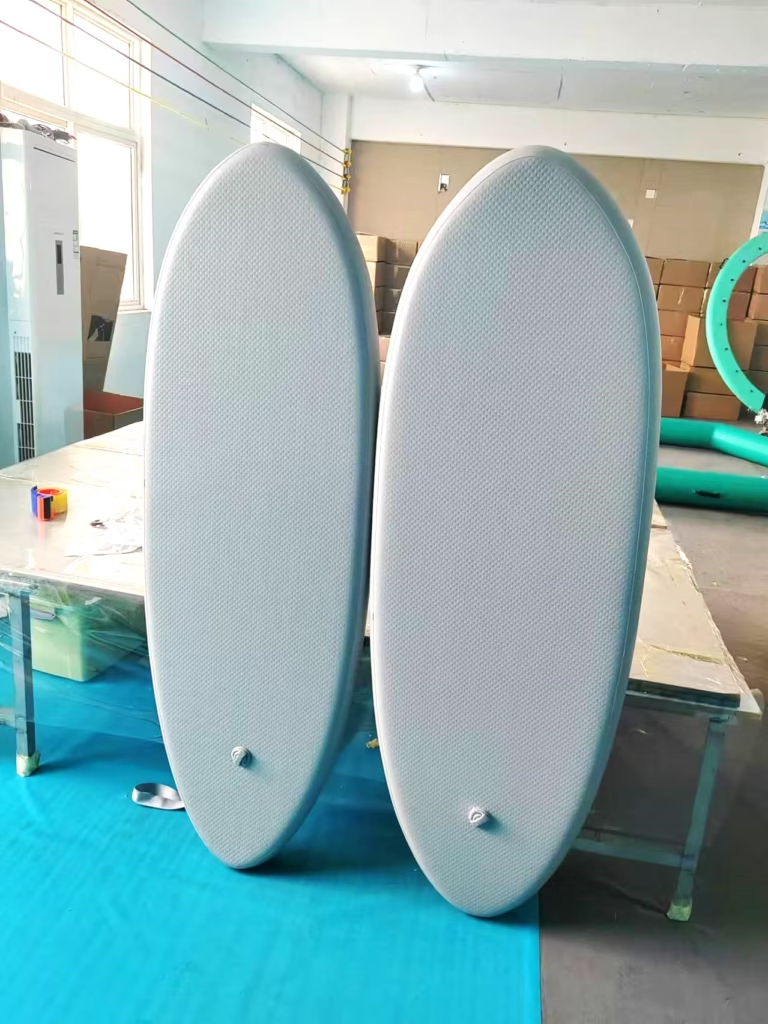
A drop stitch floor is a high‑pressure inflatable panel made from two fabric layers connected internally by thousands of vertical yarns. When inflated to high pressure, the structure becomes rigid and flat, creating a hard deck inside an inflatable craft.
Brands choose drop stitch floors because they provide:
Higher stiffness and better load support than traditional air chambers
Improved stability and energy transfer for paddlers and passengers
A thinner, “board‑like” profile that feels more premium and responsive
For mid‑ to high‑end products, a drop stitch floor is often the feature that justifies a higher retail price and strengthens your brand positioning.
2. Typical OEM Project Flow for Brands
Most drop stitch floor projects with OEM factories follow a similar structured process. Understanding each step will help you manage timelines and expectations.
Brand brief and requirements
You share your target application (boat, packraft, SUP, platform), dimensions, performance level, and price range, plus any branding requirements such as colors and logos.Technical proposal and cost estimation
The factory’s engineering team proposes a construction solution: PVC or TPU coating, knitted or woven core, thickness, pressure rating, and reinforcement layout. At the same time, you receive an initial cost estimate based on materials, complexity, and order quantity.Drawings and design confirmation
The OEM prepares 2D/3D drawings and technical specs so you can check shape, valve positions, lacing areas, and attachment points. You approve or request revisions until the design is ready for sampling.Sample development (prototype)
The factory produces physical samples that you can inflate, test on water, and evaluate for stiffness, comfort, and fit with your existing hull or product system.Feedback and final specification lock
Based on real‑world testing, you adjust thickness, pressure, materials, or small design details. Once you confirm the final spec, the factory freezes the design and prepares for production.Tooling and line setup
Cutting molds, welding fixtures, printing files, and quality standards are set up specifically for your floor to ensure repeatable results from batch to batch.Mass production and QC
The OEM runs full‑scale production: cutting, drop stitch fabric handling, coating, assembly, welding, printing, and inspection. Each unit is checked for air‑tightness, seam strength, and visual quality.Packing and delivery
Finished floors are cleaned, folded, packed with accessories (valves, repair kits, pumps if needed), and shipped to your warehouse under agreed Incoterms.
3. Design Decisions Brands Must Make
Before you can get a precise quotation and timeline, you need to make several key design choices. These decisions affect cost, performance, and user experience.
Application and load
Define whether the floor is for calm‑water leisure, whitewater, rental fleets, or heavy commercial use. Higher loads and more aggressive use demand stronger cores and coatings.Dimensions and shape
Length, width, and thickness, plus any specific shapes (tapered ends, cut‑outs, integrated keel sections) must match your hull design and product concept.Material system
Decide between PVC or TPU coatings, and whether you want knitted or woven drop stitch cores. PVC knitted cores typically serve mainstream products, while woven TPU combinations target high‑end, lightweight designs.Pressure rating
The maximum inflation pressure defines stiffness and safety margins. Higher pressure usually requires better materials and tighter manufacturing tolerances.Integration and attachments
Plan how the floor will connect to the rest of your product: lacing systems, Velcro, tunnels, D‑rings, handles, or other fixtures.Branding and aesthetics
Colors, logos, graphic printing, and texture (matte vs. glossy surfaces) all impact brand perception and retail value.
Thinking through these points early will save time and reduce redesign during sampling.
4. Material Choices: PVC, TPU, Knitted and Woven Cores
Material selection is one of the most important decisions, because it directly impacts durability, weight, stiffness, and cost.
PVC coatings
Common for mainstream inflatable water products. Balanced cost and durability, suitable for most recreational boats and packrafts.TPU coatings
Offer better cold‑weather flexibility, improved environmental performance, and sometimes weight advantages. More expensive but useful for premium and specialized products.Knitted drop stitch cores
Established, cost‑effective technology with good durability. Because knitted structures have some stretch, they may need more coating or thickness to reach high stiffness levels, which can increase weight slightly.Woven drop stitch cores
Advanced option with near‑zero stretch. This allows brands to reduce coating and weight while maintaining very high rigidity. Ideal for premium touring, racing, or performance‑oriented products.
As a brand, your choice should reflect your target price point, positioning, and customer expectations. Entry‑level lines may favor PVC + knitted cores, while flagship models may justify TPU or woven cores.
5. OEM Sampling: What Brands Should Test
When you receive your first OEM samples, treat them as engineering tools rather than finished products. You should test and measure:
Fit and integration
Check how the floor fits inside your hull or platform. Ensure there is enough clearance for inflation, deflation, and user movement.Stiffness and deflection
Inflate to recommended pressure, apply load, and observe deflection and flex. If it feels too soft or too hard, you can adjust thickness, pressure, or materials.Surface feel and ergonomics
Stand, sit, or kneel on the floor as your users would. Evaluate comfort, grip, and any edge transitions that might affect usability.Inflation behavior and valve position
Confirm that valves are accessible and that inflation is quick and straightforward. Check compatibility with your chosen pumps.Document all findings and share specific, prioritized feedback with your OEM so they can refine the design before mass production.
Visual quality and branding
Review printing sharpness, color accuracy, seam alignment, and overall appearance. These details influence retail appeal and customer trust.
Document all findings and share specific, prioritized feedback with your OEM so they can refine the design before mass production.
6. Manufacturing Process Inside an OEM Factory
Behind every drop stitch floor, there is a standardized but technical manufacturing process. While details vary by factory, most workflows include:
Material inspection and preparation
Drop stitch fabric rolls, coating materials, and accessories are checked for consistency, defects, and performance metrics before cutting.Precision cutting
Computer‑controlled cutting systems shape the floor according to your design, ensuring accurate dimensions and repeatability.Assembly and welding
Edges, sidewalls, and attachment points are assembled with high‑frequency welding, gluing, or lamination techniques. This stage defines seam strength and long‑term durability.Valve and accessory installation
Valves, D‑rings, handles, and lacing points are installed and reinforced according to your specification.Printing and branding
Logos, graphics, and color blocks are applied using screen printing, digital printing, or other methods. Consistent branding helps align the floor with your product line.Inflation and quality checks
Each floor is inflated and held for a set period to detect leaks, pressure loss, or deformation. Visual inspections confirm seam alignment and overall finish.
Understanding this process helps you ask better questions and evaluate whether a factory’s capabilities meet your brand’s standards.
7. Quality Control and Standards for Brands
Strong QC systems are essential if you want to protect your brand reputation and minimize warranty claims. When selecting or working with an OEM, pay attention to:
Documented QC procedures
Ask how they test for air‑tightness, seam strength, valve reliability, and material performance.Traceability of materials
Ensure the factory can trace each floor back to specific material batches and production runs in case of issues.Consistency across batches
Check past records or customer references to see whether quality is stable over time, not just in samples.Relevant certifications
Depending on your markets, you may need certain quality or safety certifications, and the factory should understand and support these requirements.Visual quality standards
Agree on acceptable levels of cosmetic defects, printing tolerances, and color variation before mass production.
Clear standards and regular communication reduce misunderstandings and ensure the finished floors reflect your brand promise.
8. Cost Drivers and How Brands Can Optimize
From a brand perspective, cost is always a key part of the conversation. Several core elements drive the price of OEM drop stitch floors:
Size and thickness
Larger, thicker floors use more material and take more time to produce.Material system
TPU and woven cores typically cost more than PVC and knitted cores, but they may deliver better performance or weight savings.Design complexity
Unique shapes, cut‑outs, or integrated structural features increase production complexity and development effort.Order quantity and forecast
Higher volumes and stable forecasts allow factories to optimize purchasing and scheduling, which can lead to better unit pricing.Sampling and development effort
Multiple rounds of samples and frequent design changes add engineering time, which may be reflected in your overall cost.
To optimize, brands can:
Standardize floor designs across several models where possible
Separate must‑have features from nice‑to‑have options
Start with a clear brief to minimize rework
Plan realistic volumes and timelines to support efficient factory planning
This way, you can maintain performance and brand value without overshooting your target price point.
9. Working Effectively With Your OEM Partner
Successful drop stitch floor projects are built on collaboration and transparency. To get the best results:
Share clear, complete information early
Invite technical suggestions from the factory instead of only pushing fixed ideas
Maintain fast feedback cycles during sampling
Align on quality standards and documentation before mass production
Treat the OEM as a long‑term partner, not just a price provider
When both sides focus on performance, reliability, and total cost of ownership, you can build drop stitch floors that strengthen your product line and keep your customers satisfied season after season.
Related Products:
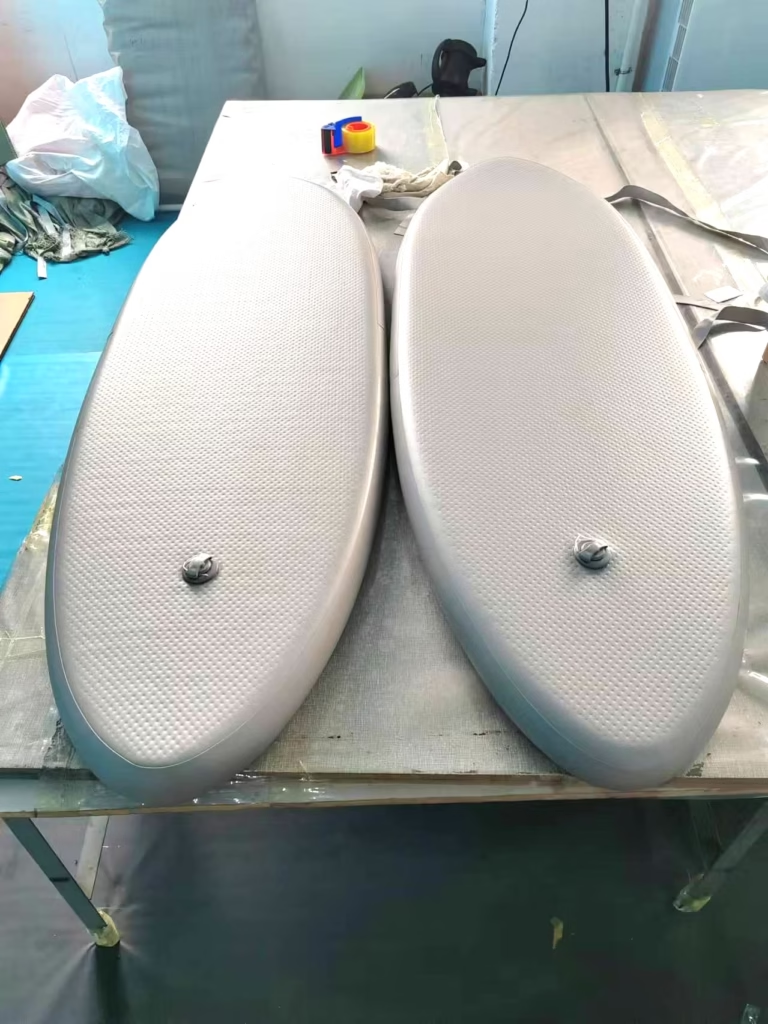
Custom Drop Stitch Floor – High Performance Inflatable Rigid Flooring
Learn More
Learn more about TPU Packraft manufacturing capabilities.

Related Solutions
Discover our full range of Inflatable Water Sports products.