Introduction: Why Battery Health Matters More Than Ever
Have you ever noticed that a battery doesn’t last as long as it used to after months of use?
Or wondered why two devices with the same battery capacity perform differently over time?
The answer often comes down to one key concept: Battery SOH (State of Health).
As electric products—from e-scooters to electric surfboards—become more common, understanding battery health is no longer just for engineers. It is becoming essential for users, buyers, and manufacturers alike—especially with new EU regulations now making SOH data increasingly important.
What is Battery SOH (State of Health)?
Battery SOH (State of Health) is a measure of a battery’s overall condition compared to when it was new.
In simple terms:
- SOH = 100% → Brand new battery
- SOH = 80% → Noticeable degradation
- SOH < 70% → Battery may need replacement
SOH reflects how much a battery has aged and how much performance it has lost over time.
SOH vs SOC: What’s the Difference?
This is a common confusion:
- SOC (State of Charge) = How much charge the battery currently has
- SOH (State of Health) = How healthy the battery is overall
👉 Think of it this way:
SOC is like your fuel level, while SOH is like your engine condition.
How is SOH Calculated?
SOH is not directly measured—it is estimated using data and algorithms.
Common methods include:
- Capacity-based estimation
Comparing current capacity to original capacity - Internal resistance tracking
As batteries age, resistance increases - Cycle count analysis
Number of charge/discharge cycles
A simplified formula is:
- SOH ≈ Current Capacity ÷ Original Capacity
However, in real-world applications, advanced algorithms in the Battery Management System (BMS) are used to improve accuracy.
Why is SOH Important?
1. For End Users
- Understand when to replace a battery
- Avoid unexpected performance drops
- Improve safety and reliability
2. For Businesses and OEM Buyers
- Define warranty standards
- Evaluate product quality
- Reduce after-sales disputes
3. For Second-Life Applications
- Determine if a battery can be reused
- Support energy storage applications
👉 In short, SOH helps everyone make better decisions about battery usage and lifecycle.
How Does an SOH System Work?
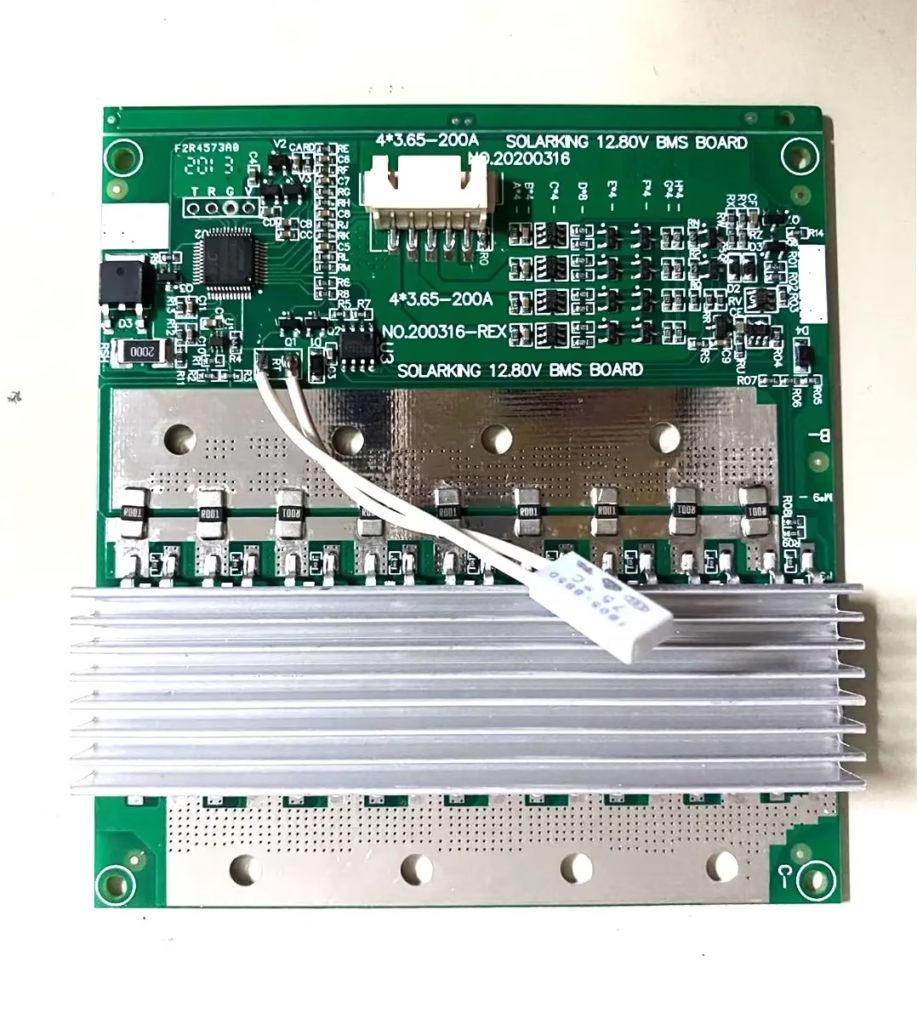
SOH is typically calculated and managed by a Battery Management System (BMS).
A complete SOH system includes:
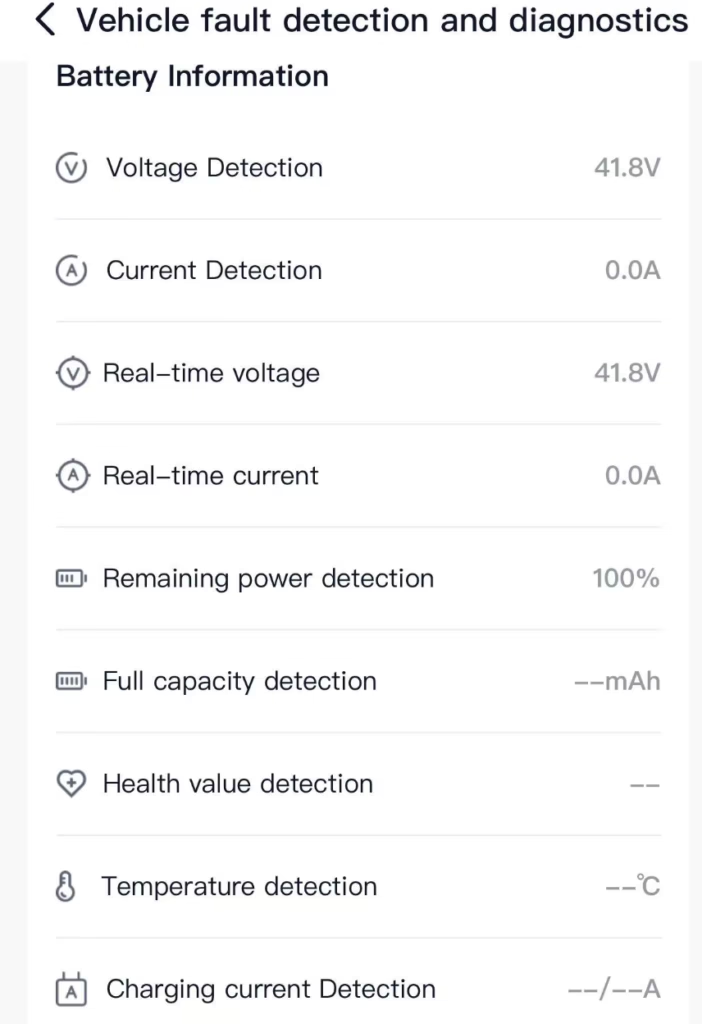
- Data collection
Voltage, current, temperature - Algorithm processing
Estimating degradation and performance - Data output
Display, app, or diagnostic tools
Some systems only allow factory-level data access, while more advanced systems enable users to check SOH via apps or onboard displays.
Why is the EU Regulating Battery SOH?
The growing use of batteries has raised concerns about:
- Environmental impact
- Battery waste and recycling
- Product transparency
- Safety and lifecycle tracking
To address these issues, the EU introduced the EU Battery Regulation (EU) 2023/1542.
This regulation aims to make batteries:
- More transparent
- More sustainable
- Easier to track throughout their lifecycle
EU Requirements: SOH is Becoming Mandatory
2024: Battery Data Must Be Available
From 2024 onwards, batteries placed on the EU market must provide key performance data, including information related to health and lifespan.
2027: Introduction of the Battery Passport
By 2027, the EU will require a digital Battery Passport for many types of batteries.
This passport will include:
- State of Health (SOH)
- Remaining lifetime
- Cycle data
- Performance history
👉 Most importantly:
SOH data must be accessible and updatable—not just static factory data.
Which Products Are Affected?
Scope of Application
According to the EU Battery Regulation (EU) 2023/1542, the scope is defined at the battery level rather than the product level.
All batteries placed on the EU market are within scope, regardless of the end-use application.
In practical terms, this includes batteries integrated in consumer electronics, mobility devices, vehicles, and industrial equipment. The regulation applies irrespective of whether the battery is removable, embedded, or part of a larger system.
Categories with Highest SOH Relevance
Although the regulation applies universally, SOH-related requirements are primarily enforced in the following categories:
Electric Vehicle (EV) Batteries
Traction batteries used in road vehicles.
These are subject to the most comprehensive regulatory framework, where SOH is a required parameter for performance, durability, and lifecycle transparency.
Light Means of Transport (LMT) Batteries
Batteries used in lightweight mobility applications.
This category is increasingly regulated, with a growing emphasis on performance data availability, including SOH and expected lifetime.
Industrial Batteries
All batteries used for industrial purposes, including stationary energy storage and non-road applications.
This is the broadest classification and captures a wide range of products that do not fall under EV or portable categories.
What Happens Without an SOH System?
Products without proper SOH functionality may face:
- Difficulty entering the EU market
- Compliance risks with new regulations
- Limited after-sales support
- Poor user experience
👉 In the near future, lacking SOH may become a market barrier, not just a technical limitation.
Future Trends: From Feature to Standard
Battery SOH is rapidly evolving:
- From optional → to mandatory
- From hidden data → to user-accessible information
- From standalone feature → to connected digital systems
We are also seeing increasing integration with:
- Mobile apps
- Cloud platforms
- Smart diagnostics
👉 SOH is becoming a key part of the “digital battery ecosystem”.
Conclusion
Battery SOH (State of Health) is no longer just a technical metric—it is becoming a critical requirement in modern electric products.
With the implementation of the EU Battery Regulation:
- SOH data is becoming mandatory
- Battery transparency is increasing
- Digital tracking systems are emerging
For manufacturers, buyers, and users alike, understanding SOH is essential to staying competitive and compliant in the evolving global market.
In simple terms: SOH is shifting from a technical detail to a market requirement.
Learn more about our complete manufacturing solutions.
 Kids Electric Balance Bike Manufacturer OEM & ODM
Explore our complete product portfolio.