Electric Surfboard Battery: 18650 vs 21700 Cells Comparison
Battery performance is the core factor that determines an electric surfboard’s runtime, power output, and reliability.
Today, most manufacturers use either 18650 or 21700 lithium-ion cells. While they may seem similar, the differences between them directly impact:
- Ride time
- Acceleration and thrust
- Product lifespan
- Safety in water environments
If you’re sourcing or developing electric surfboards, choosing the right cell format is a critical decision—not just a technical detail.
🔋 What Are 18650 and 21700 Cells?
Both are cylindrical lithium-ion battery cells, named after their dimensions:
| Cell Type | Diameter | Length |
|---|---|---|
| 18650 | 18 mm | 65 mm |
| 21700 | 21 mm | 70 mm |
The 21700 is essentially a larger and more advanced evolution of the 18650.
⚙️ Key Differences That Matter
1. Capacity & Energy Density
- 18650: typically 2500–3500 mAh
- 21700: typically 4000–5000+ mAh
👉 Result:
- 21700 packs deliver longer ride time (20–40% increase)
- Fewer cells needed for the same capacity
2. Power Output (Critical for Surfboards)
Electric surfboards demand high discharge rates.
- 21700 cells provide:
- Higher continuous current
- More stable voltage under load
👉 Meaning:
- Stronger acceleration
- Better performance in waves
- Less power drop at high speed
3. Heat Management & Safety
Heat is a major issue in sealed waterproof battery compartments.
- 21700 cells:
- Lower internal resistance
- Better thermal stability
👉 Result:
- Reduced overheating risk
- Longer battery lifespan
- Safer operation in marine environments
4. Battery Pack Design Efficiency
Because 21700 cells are larger:
- Fewer cells required
- Simpler internal structure
- Reduced welding points
👉 This leads to:
- Lower failure rates
- More reliable waterproof sealing
5. Cost Consideration
- 18650:
- Lower upfront cost
- Widely available
- 21700:
- Higher cost per cell
- Better cost-performance over time
👉 For high-end surfboards, 21700 is usually more cost-efficient in the long run.
🆚 18650 vs 21700 – Quick Comparison
| Feature | 18650 Cells | 21700 Cells |
|---|---|---|
| Capacity | Medium | High |
| Runtime | Standard | Longer (+20–40%) |
| Power Output | Moderate | High |
| Heat Control | Average | Better |
| Pack Complexity | Higher | Lower |
| Lifespan | Standard | Longer |
| Cost | Lower | Higher upfront |
🌊 Which One Is Better for Electric Surfboard battery?
✅ Choose 18650 if:
- Entry-level products
- Budget-focused markets
- Lower power systems
✅ Choose 21700 if:
- High-performance surfboards
- Longer runtime required
- Premium or export markets
- Brand differentiation is important
👉 Industry trend:
Most premium electric surfboards are shifting toward 21700-based battery systems.
🏭 OEM & Manufacturing Considerations
From a factory perspective, battery cell choice affects more than performance:
With 21700 systems, you can achieve:
- Higher-end product positioning
- Better thermal design integration
- Lower warranty risk
- Stronger marketing advantage
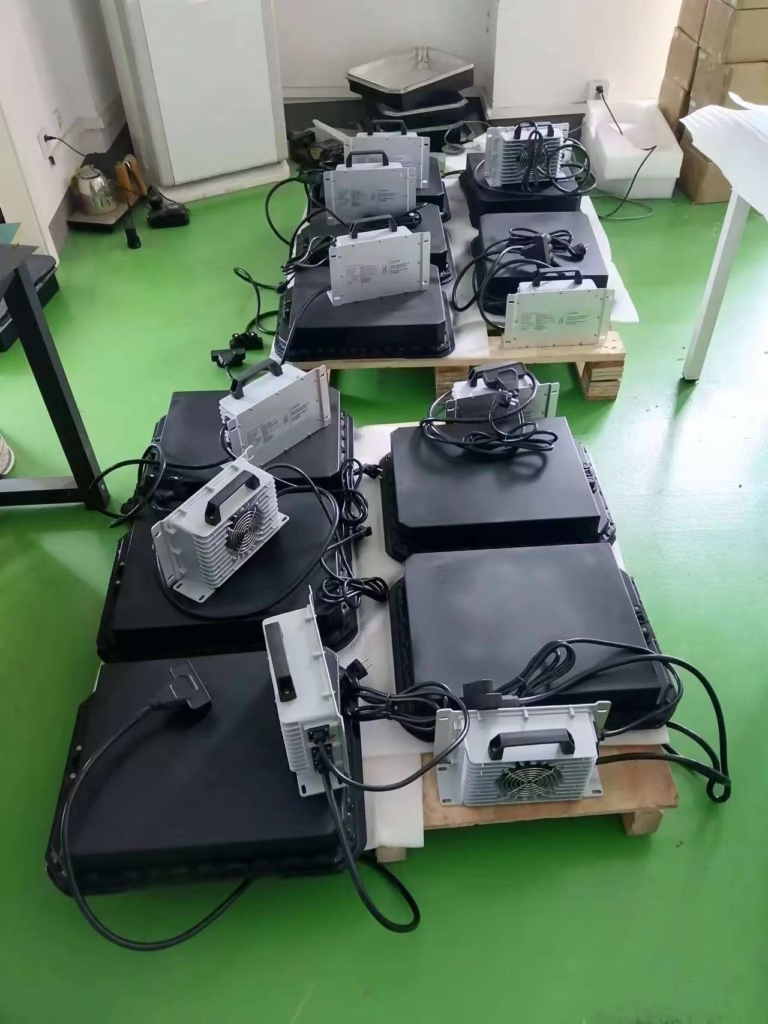
Customization options include:
- Battery capacity (kWh scaling)
- Fast-charging systems
- Swappable battery modules
- Advanced BMS protection

⚠️ Common Mistake Buyers Make
Many buyers focus only on:
- Voltage (e.g., 48V / 60V)
- Total capacity
But ignore:
👉 Cell type and quality
This leads to:
- Overheating issues
- Fast degradation
- Inconsistent performance
📊 Final Verdict
- 18650 = proven, affordable, entry-level
- 21700 = higher performance, longer lifespan, future standard
For serious electric surfboard applications,
👉 21700 cells are the better long-term choice.
📩 CTA
Looking for high-performance electric surfboard battery solutions?
We provide:
- 21700-based lithium battery systems
- Waterproof battery design (marine-grade)
- OEM/ODM customization
- Stable supply for global distributors
👉 Contact us for technical specs, pricing, and customization options.
👉 Explore more in this category: Electric Surfboard