🧭 Introduction
Choosing the right packraft material affects more than the final product price. It influences finished boat weight, packed size, abrasion resistance, cold-weather flexibility, seam construction, repair options and long-term durability.
For most modern packraft projects, the main material decision is TPU vs PVC. TPU-coated nylon is commonly selected for lightweight and premium outdoor packrafts, while PVC remains a practical option for cost-sensitive inflatable products. CSM, widely known by the former brand name Hypalon, may be considered for selected heavy-duty applications but is less common for ultralight packrafts.
This guide compares TPU, PVC and CSM packraft materials from both a product-development and OEM manufacturing perspective. It is designed for outdoor brands, importers, distributors and product developers deciding which construction best fits their target market.
Looking for a finished packraft manufacturing partner?
XSEA supplies finished packrafts for B2B orders, including OEM/ODM projects. We do not sell raw fabric by the metre or roll.
🧪 What Are Packraft Materials?
Packrafts are usually made from coated technical fabrics rather than from a single solid material. The finished fabric normally combines a woven base cloth, such as nylon or polyester, with an air-retaining coating such as TPU, PVC or CSM.
The coating helps provide waterproof performance and air retention. The base fabric contributes tensile strength, tear resistance and dimensional stability. Final performance also depends on fabric denier, coating thickness, floor reinforcement, seam construction, valve quality and the intended operating pressure.
For this reason, a material name alone does not define packraft quality. Two TPU packrafts can perform very differently when they use different base fabrics, denier levels, coating systems, floor designs or welding processes.
🥇 TPU Packraft Material (Premium Lightweight Option)
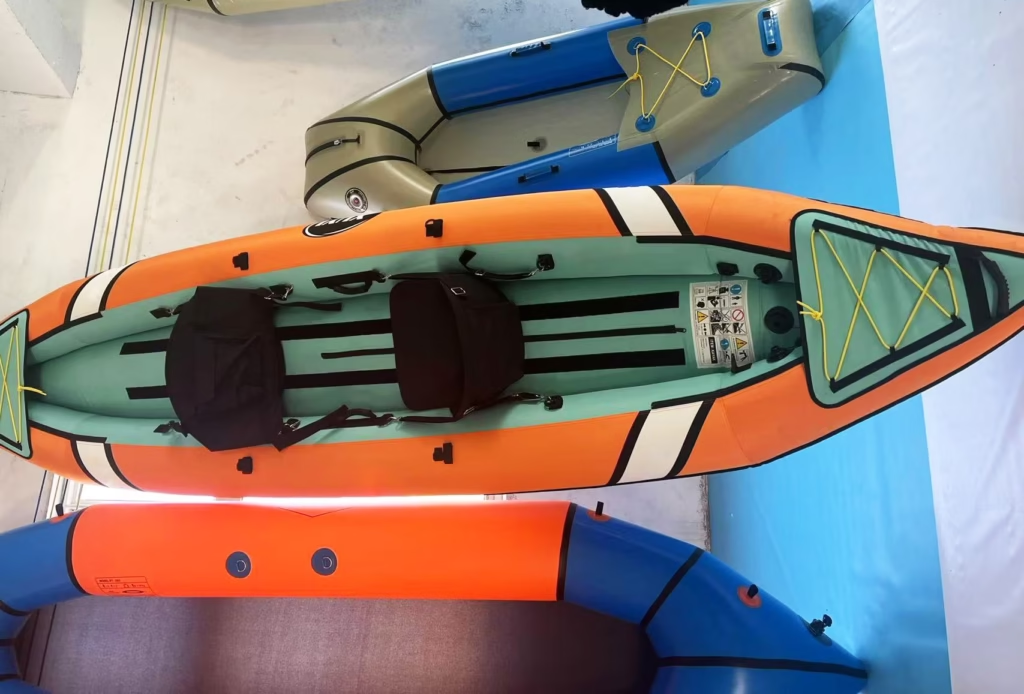
TPU, or thermoplastic polyurethane, is widely used in lightweight and performance-oriented packraft projects. TPU-coated nylon can combine low weight, good flexibility and strong abrasion resistance when the fabric base, coating system and reinforcement design are correctly selected.
For hiking, bikepacking, expedition travel and premium outdoor markets, TPU is often chosen because the finished packraft can be lighter and more compact than many PVC alternatives. TPU-based construction can also be compatible with heat-welding processes, which may create clean and consistent seams when the material system and production parameters are properly controlled.
Typical advantages of TPU packraft materials include:
Lower finished weight for ultralight projects
Good foldability and compact packed size
Good flexibility in cooler conditions, depending on the exact TPU formulation
Strong abrasion performance when combined with suitable nylon fabric and reinforced high-wear areas
Compatibility with selected heat-welding manufacturing methods
Premium positioning for backpacking, expedition and technical outdoor products
TPU is not automatically the right choice for every project. It usually has a higher material cost than PVC, and premium lightweight designs require careful control of fabric selection, welding parameters, seam design and quality inspection.
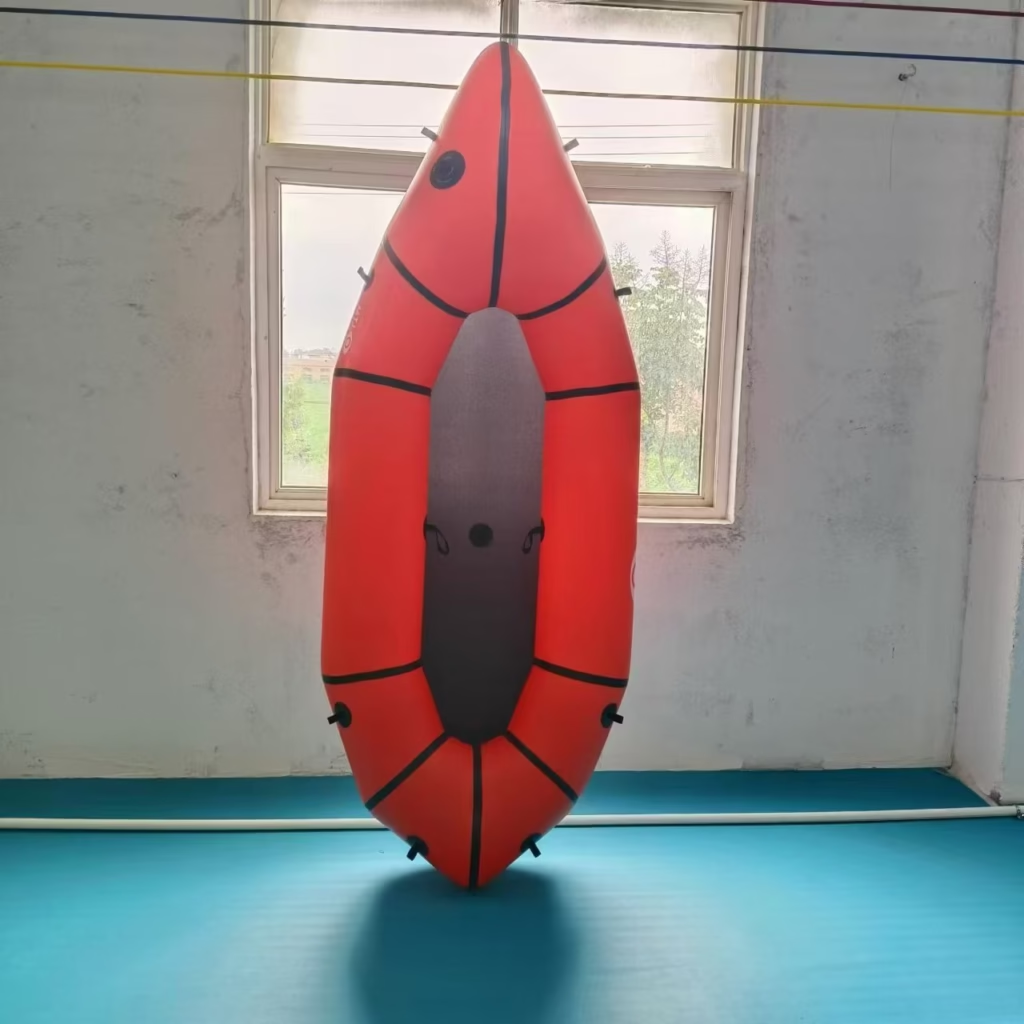
Best uses for TPU packrafts
TPU is typically suitable for ultralight backpacking packrafts, expedition models, bikepacking products, premium outdoor brands and projects where packed weight and portability are important buying factors.
🥈 PVC Packraft Material (Cost-Effective Standard)
PVC, or polyvinyl chloride, is widely used across the inflatable-products industry because of its established supply chain, relatively lower cost and broad manufacturing familiarity. For value-focused inflatable products, PVC can be a practical choice when product price, production scale and visual customization are more important than achieving the lowest possible packed weight.
PVC packraft construction may use different fabric and production systems depending on the supplier and product design. Seam production can involve adhesive bonding, welding or a combination of processes. Buyers should confirm the actual fabric construction and seam method instead of assuming that all PVC inflatables are made in the same way.
Key advantages of PVC packraft materials:
Lower material and production cost in many projects
Broad availability of fabrics, colors and accessories
Suitable for entry-level and mid-range market positioning
Established manufacturing processes for many inflatable products
Potentially suitable for larger-volume, cost-sensitive programs
PVC can be heavier and less compact than TPU for ultralight packraft designs. Its low-temperature flexibility, long-term fold behavior and final performance depend heavily on the PVC formulation, fabric construction and storage conditions.
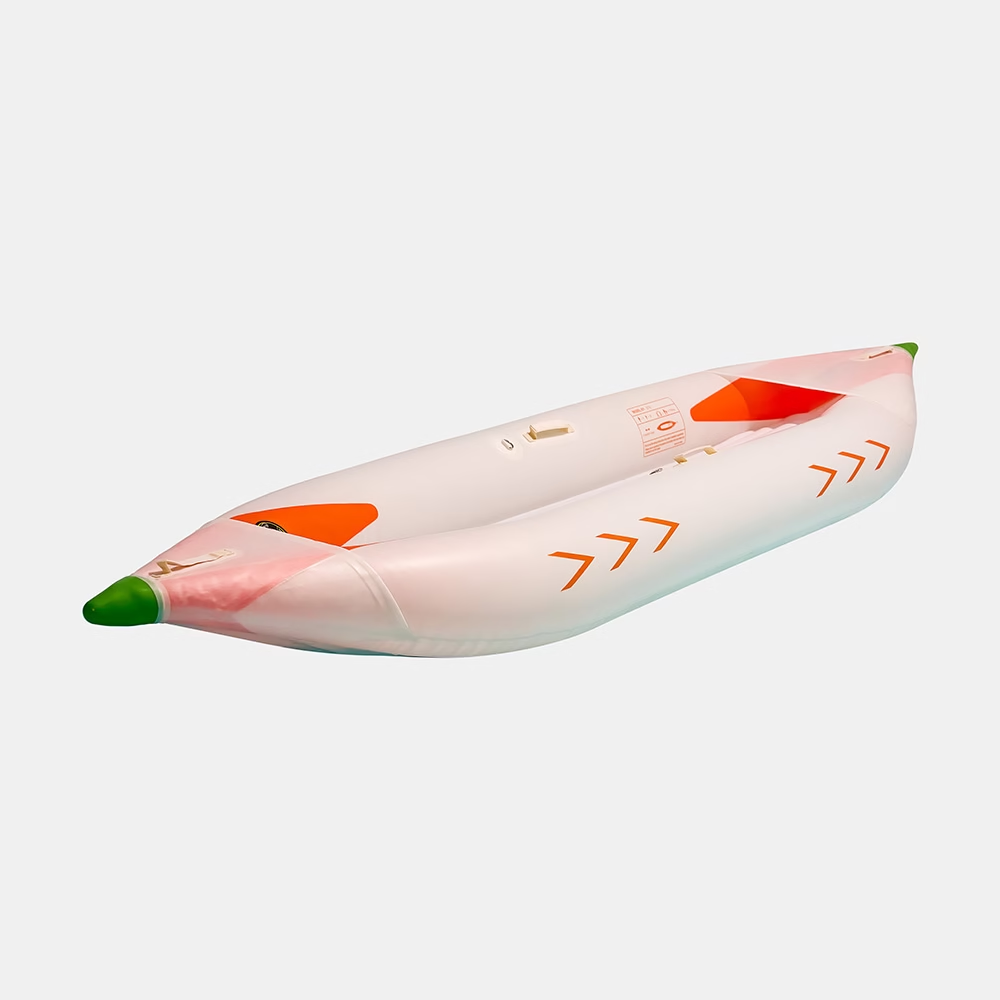
Best uses for PVC packrafts:
PVC may be suitable for entry-level recreational packrafts, promotional outdoor products, price-sensitive retail programs and projects where a slightly higher packed weight is acceptable.
🥉 CSM (Formerly Called Hypalon): Heavy-Duty Material for Selected Applications
Hypalon was originally a DuPont trade name. Today, the material is more accurately described as CSM, or chlorosulfonated polyethylene. In the inflatable-products industry, many buyers still use the name Hypalon when referring to CSM-coated fabric.
CSM is known for strong UV resistance, chemical resistance and long-term durability in demanding environments. However, it is generally heavier and more labor-intensive to process than TPU or PVC. CSM construction often relies on specialized adhesive bonding and skilled manual work.
For this reason, CSM is more commonly considered for professional, commercial or heavy-duty inflatable applications than for ultralight backpacking packrafts.
Best uses for CSM / Hypalon:
CSM may be considered for selected professional, rescue, commercial, marine or harsh-environment inflatable projects where UV resistance and long service life are more important than minimum weight and compact packability.
⚖️ TPU vs PVC vs CSM: Packraft Materials Comparison
| Selection Factor | TPU-Coated Nylon | PVC-Coated Fabric | CSM / “Hypalon” Fabric |
|---|---|---|---|
| Finished weight | Usually best for ultralight packrafts | Usually heavier than TPU | Usually the heaviest option |
| Packability | Excellent for compact outdoor products | Moderate | Moderate to lower |
| Abrasion resistance | Strong with suitable fabric base and reinforcement | Good, depending on thickness and construction | Very strong for heavy-duty use |
| Cold-weather flexibility | Generally good, depending on formulation | Can become stiffer in cold conditions | Generally good |
| UV resistance | Good, but depends on coating and use conditions | Moderate to good, depending on formulation | Excellent |
| Seam process | Often compatible with controlled heat welding | May use welding, bonding, or mixed construction | Often uses specialized adhesive bonding |
| Repair approach | Must match the TPU construction and repair system | Common PVC repair systems are widely available | Requires appropriate CSM adhesive repair system |
| Material cost | Medium to high | Low to medium | High |
| Best-fit market | Premium ultralight and expedition projects | Entry-level and value-focused programs | Heavy-duty professional applications |
👉 For most lightweight packraft projects, TPU-coated nylon offers the strongest balance of low weight, compact packability and outdoor performance. However, PVC can be the more appropriate choice for cost-sensitive programs, while CSM may be considered for selected heavy-duty applications.
Choosing Materials for a Private-Label Packraft?
Send your target finished weight, packed size, intended use, tube and floor requirements, and estimated order quantity. XSEA develops complete TPU and PVC packrafts for OEM projects. Use these requirements to discuss a suitable construction before selecting a sample.
Discuss My OEM Packraft Specification
⚙️ How Material Choice Affects Packraft Manufacturing
TPU:
- Confirm the joining process against the selected coated fabric and seam design. Review sample seam quality and air retention before approving production.
- High precision machinery
- Strong, clean seams
PVC:
- Glue bonding or heat welding
- Lower production cost
- Easier scalability
Hypalon:
- Hand-gluing process
- Labor-intensive
- High craftsmanship requirement
👉 Manufacturing capability directly affects product quality and defect rate.
How to Choose Packraft Fabric for OEM Manufacturing
For OEM packraft development, material selection should be based on the complete product design rather than a single fabric name. The correct material depends on the intended use, target weight, required durability, market price position, construction method and expected order volume.
Before bulk production, brands should confirm:
Target use: hiking, flatwater, whitewater, fishing, expedition, rental or rescue
Target finished boat weight and packed size
Base-fabric type and denier requirement
Tube, floor and reinforcement material requirements
TPU, PVC or CSM coating preference
Seam method and quality-control process
Valve, seat, cargo zipper, spray deck and accessory requirements
Color, logo, label and packaging specifications
Sample approval requirements and expected order quantity
A lightweight TPU packraft for backpacking requires a different construction from a fishing packraft, a rental product or a rugged whitewater model. Material selection should therefore be confirmed together with the floor design, reinforcement layout and manufacturing process.
Planning a finished packraft for your brand? Share your intended use, target finished weight, dimensions and expected order quantity. Visit our packraft manufacturing page to discuss your OEM/ODM project.
🎯 Packraft Fabric Durability: What Should Buyers Compare?
Packraft fabric durability is not determined by TPU, PVC or CSM alone. It also depends on the base fabric, denier, coating thickness, seam design, floor reinforcement, intended pressure, use conditions and maintenance practices.
When comparing packraft fabrics, buyers should evaluate abrasion resistance, puncture resistance, tear strength, seam strength, UV exposure, low-temperature flexibility, fold performance, repairability and color consistency. A lightweight fabric can reduce packed weight, but high-wear zones may require reinforcement for rocky riverbanks, cargo areas, fishing use or repeated rental operation.
Packraft Fabric Samples: What to Test Before Bulk Production?
For OEM buyers, a small fabric swatch is useful, but a finished packraft sample provides much more reliable information before bulk production. The sample should be inflated, folded, packed, transported and tested in conditions that reflect its intended use.
A practical sample review should include air retention, seam quality, valve performance, floor construction, abrasion-prone areas, packed size, logo appearance, accessory fit, repair-kit compatibility and final packaging. For custom projects, buyers should also confirm material color, surface texture and print quality before approving production.
Why TPU Is Common in Premium Ultralight Packrafts
TPU is commonly selected for premium ultralight packraft projects because brands increasingly value low packed weight, compact storage and flexible performance for hiking, bikepacking and expedition use. Its suitability for a particular project still depends on the selected fabric system, construction method and target price.
PVC and CSM remain relevant for different product positions. The best material is not always the lightest or most expensive option; it is the one that matches the expected user, product specification, durability target and market price.
Common Material-Selection Mistakes in OEM Packraft Projects
Selecting material only by price instead of considering use conditions and target customer.
Comparing TPU and PVC without confirming base fabric, denier and floor reinforcement.
Assuming all welded or bonded seams perform the same way.
Ignoring packed weight for backpacking and expedition projects.
Approving a fabric swatch without testing a finished packraft sample.
Choosing a material without confirming repair-kit compatibility.
Overlooking UV exposure, storage temperature and long-term folding conditions.
Working with a supplier that cannot explain its material, seam process or inspection method.
Develop a Custom TPU or PVC Packraft
There is no single best packraft material for every market. TPU is often preferred for premium lightweight and expedition products, PVC can be practical for cost-efficient programs, and CSM may suit selected heavy-duty applications.
XSEA develops custom TPU and PVC packrafts for outdoor brands, distributors and OEM projects. We can support material selection, boat shape, tube diameter, floor construction, reinforcement layout, valves, seats, accessories, logo printing, packaging, sample development and quality inspection.
Send us your target use, preferred material, target size, expected quantity and destination market to discuss a suitable packraft construction for your project.
 Explore Products
Learn more about our complete manufacturing solutions.
Explore our complete product portfolio.
 Contact us for product specifications and OEM solutions.
[  WhatsApp Inquiry ] [
  Email Us ]