Electric Surfboard vs. Gas Powered Surfboard: Which One Is Best for Your Water Sports Business?
Introduction
When choosing between an electric surfboard and a gas-powered jetboard, water sports enthusiasts, resort owners, and rental business operators often face a tough decision. Both offer thrilling speeds on the water, but they differ significantly in terms of propulsion, maintenance, operating costs, and overall rider experience.
In this detailed comparison, we break down the key differences to help you decide which watercraft fits your personal use or commercial rental fleet.

📊 Quick Feature Comparison Table
| Performance Metric | Electric Surfboard | Gas-Powered Jetboard (e.g., 118CC) |
| Power Source | Rechargeable Lithium Battery + Electric Motor | Gasoline Internal Combustion Engine + Jet Pump |
| Throttle Response | Instant, smooth, and highly controllable | Aggressive power delivery, raw horsepower |
| Top Speed & Thrill | High performance, perfect for dynamic carving | Extremely high top speed and deep acceleration |
| Run Time / Battery Life | Around 45–60 minutes per charge (swappable batteries) | Riding time depends on fuel capacity and consumption; refueling allows further sessions. |
| Maintenance Needs | Low: Minimal moving parts, no oil changes required | Higher: Requires regular engine and fuel-line upkeep |
| Environmental Impact | No direct exhaust emissions during riding; quieter operation than gasoline engines. | Emits exhaust, produces engine roar |
| Ideal Application | Water sports rentals, resorts, eco-friendly cruising | Extreme sports enthusiasts, long-distance riding |
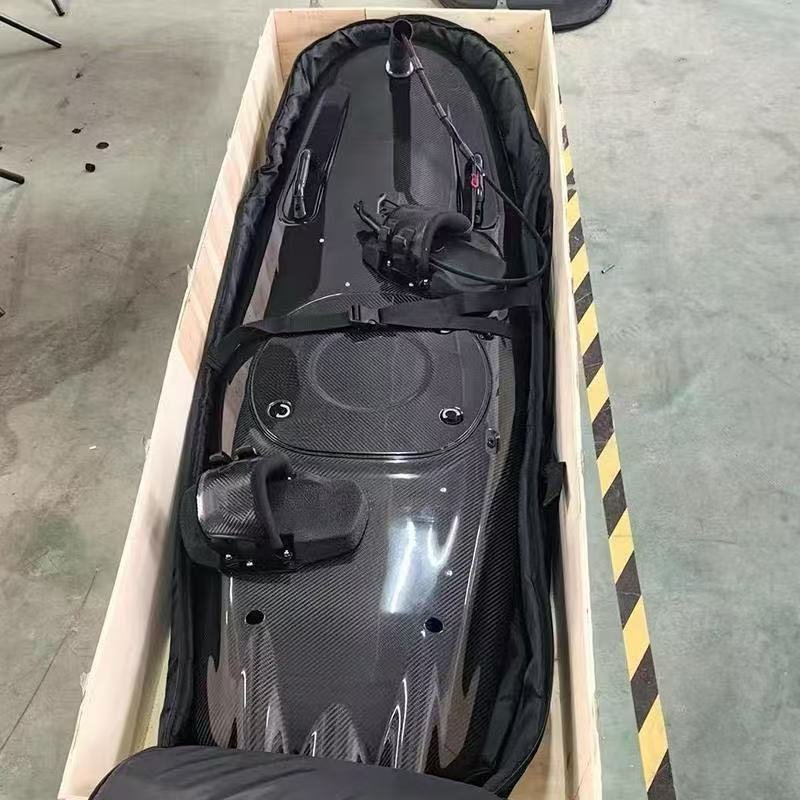
1. Propulsion & Performance
Electric Surfboards: Powered by high-capacity lithium batteries and efficient electric motors, electric surfboards offer instant torque and smooth power delivery. They are extremely friendly for beginners and intermediate riders because the throttle is linear and easy to control.
Gas-Powered Jetboards: Driven by gasoline internal combustion engines, such as the 118cc engine used in our gas-powered jetboard , gas jetboards deliver a traditional mechanical roar and aggressive raw power. They appeal heavily to adrenaline seekers who love high-speed jumps and sharp, powerful turns.
2. Run Time and Endurance
Electric Boards: Typically offer 45 to 60 minutes of ride time per battery charge, depending on rider weight and throttle usage. For commercial operations, investing in spare quick-swap batteries solves this limitation easily.
Gas Boards: Gas boards can be refueled between sessions without waiting for battery charging. Riding time per tank depends on fuel capacity, engine consumption and riding conditions.
🔧 3.Maintenance
Electric surfboards generally require less routine mechanical maintenance because they do not use a combustion engine or gasoline fuel system.
Typical maintenance may include checking:
- Battery condition
- Motor and electrical connections
- Propulsion components
- Seals and waterproofing
- Board and hull condition
Gas powered surfboards require additional engine-related maintenance, such as checking the fuel system, engine components, lubrication, and other mechanical parts.
For businesses operating multiple boards, maintenance requirements can have a significant effect on long-term operating costs.
🔇 4. Noise Level
Noise is another clear difference.
Electric surfboards operate with an electric motor and are generally much quieter during operation.
Gas powered surfboards produce engine and exhaust noise because of the combustion process.
For resorts, tourist attractions, rental operations, and residential waterways, lower operating noise can make electric surfboards more suitable.
💰 5.Operating Cost
The total cost of ownership depends on the specific model, battery or engine configuration, riding frequency, maintenance requirements, and local energy or fuel prices.
Electric surfboards generally have lower routine mechanical maintenance requirements, while gas powered surfboards require gasoline and more engine-related maintenance.
For frequent commercial use, buyers should compare not only the purchase price but also:
- Energy or fuel consumption
- Battery replacement cost
- Engine maintenance
- Spare parts
- Charging requirements
- Expected service life
A higher initial purchase price does not necessarily mean a higher long-term operating cost.
🌊 6.Environmental and Operating Considerations
Electric surfboards produce no direct exhaust emissions while riding because they do not burn gasoline onboard.
Gas powered surfboards use combustion engines and therefore produce exhaust emissions during operation.
This difference can be important for businesses operating in locations with noise, emissions, or environmental restrictions.
Local waterway regulations should always be checked before choosing either type of motorized surfboard.
🔷Which Surfboard Is Better for Different Applications?
Neither system is automatically better for every user. The right choice depends on the intended application.
Electric Surfboards Are Suitable For
- Recreational riding
- Rental businesses
- Tourist attractions
- Resorts and water parks
- Beginners and intermediate riders
- Low-noise operating environments
- Commercial applications requiring easier routine maintenance
Gas Powered Surfboards Are Suitable For
- High-performance riding
- Adventure water sports
- Experienced riders
- Applications requiring quick refueling
- Extended riding sessions
- Performance-focused markets

🔷💡 Which One Should You Choose?
Choose an Electric Surfboard if: You manage a hotel/resort, run a water sports rental business seeking low maintenance, or want a clean, quiet, and eco-friendly ride. (Explore our high-performance 12kW Electric Surfboard models).
Choose a Gas-Powered Jetboard if: You are an extreme sports rider, prioritize quick refueling between riding sessions, or prefer the raw mechanical sound and high-speed aggression of a combustion engine. (Check out our 118CC Gas-Powered Jetboard).
🔷 Conclusion
The choice between an electric surfboard and a gas powered surfboard depends on the rider, application, performance requirements, and operating environment.
Electric surfboards offer quiet operation, smooth power delivery, and generally simpler routine maintenance, making them attractive for recreational, rental, and tourism applications.
Gas powered surfboards remain relevant for performance-oriented users who prioritize strong mechanical power, extended operation, and quick refueling.
For distributors, rental operators, and OEM buyers, the best solution should be selected according to the target market rather than simply choosing one power system over the other.
Looking for an Electric or Gas Powered Surfboard Manufacturer?
Xsea provides OEM and ODM solutions for electric and gas powered surfboards, including product customization, branding, hull options, and power system configurations.
Learn more about our complete manufacturing solutions.
Explore our complete product portfolio.
[  WhatsApp Inquiry ] [
 Email Us ]