How Much Does a Custom Drop Stitch Floor Cost?
If you are designing an inflatable boat, packraft, or water sports platform, the drop stitch floor is usually one of the most expensive components. A custom drop stitch floor costs more than standard off-the-shelf parts, because you are paying for tailored dimensions, tooling, and brand-specific features.
In this article, we break down what actually drives the cost of a custom drop stitch floor, typical price ranges you can expect, and how to reduce your total project budget without compromising performance.
What Is a Drop Stitch Floor?
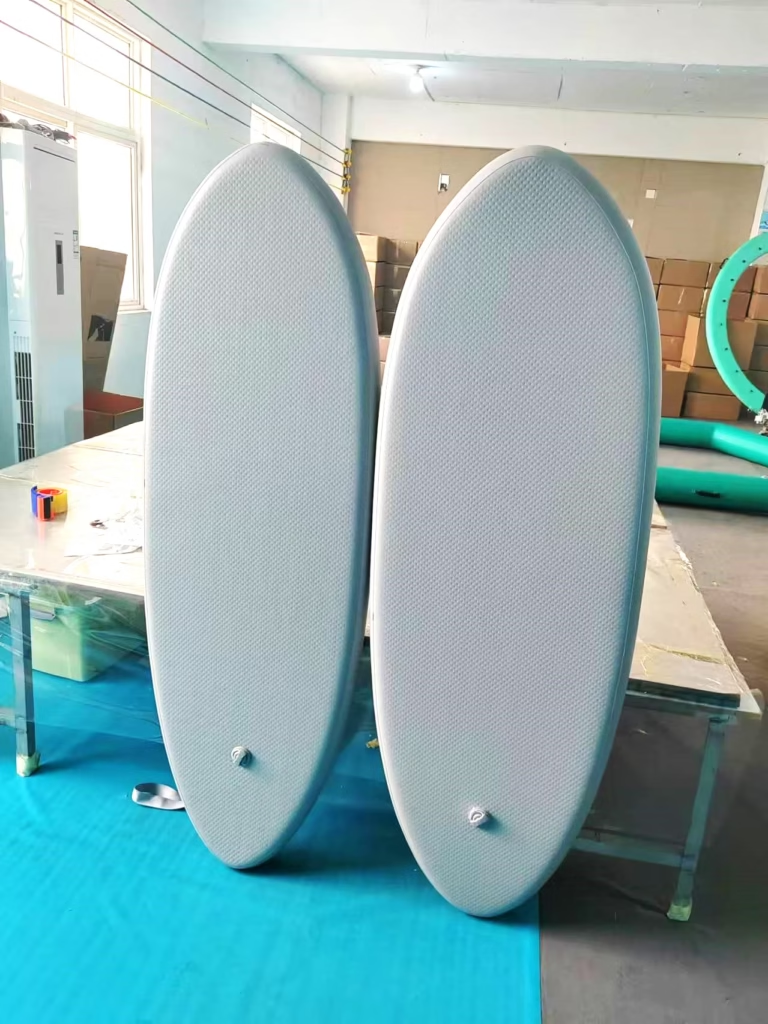
A drop stitch floor is a high-pressure inflatable panel made with thousands of internal polyester threads connecting the top and bottom PVC or TPU layers. When inflated to 8–12 psi or higher, this structure becomes very rigid, providing a hard, stable floor inside an inflatable boat or packraft.
Compared with traditional I‑beam or air chambers, drop stitch floors deliver:
Higher stiffness under load
Better stability and energy transfer
Thinner profile with less flex
Because the technology and materials are more complex, it naturally comes with a higher cost than simple air chambers.
Key Cost Factors for Custom Drop Stitch Floors
When you ask “How much does a custom drop stitch floor cost?”, the honest answer is: it depends on several technical and commercial factors working together. The main drivers are:
Dimensions and thickness
Larger floors require more fabric and more stitching, which increases both material and labor cost.
Higher thickness (for example 8–10 cm vs. 6 cm) means more drop stitch volume and higher material usage.Material selection: PVC vs. TPU
PVC drop stitch is widely used and offers a good balance of cost and performance for most boats and rafts.
TPU drop stitch provides better cold‑weather flexibility and environmental performance, but at a noticeable price premium.
Pressure rating and performance spec
Floors designed for higher pressure (e.g. 10–12 psi) often need stronger fabrics, higher quality threads, and tighter production tolerances, which add cost.Customization level
Any non-standard specification will increase price, for example:Special shapes (cut‑outs, curved ends, integrated keel sections)
Custom valve positions or multiple chambers
Branding elements such as color matching or printed logos
Order quantity (MOQ and volume)
Unit cost is heavily influenced by how many pieces you order.Small trial orders pay more per floor because set‑up time and tooling are amortized over fewer units.
Stable, repeat orders allow the factory to optimize production and offer more competitive pricing.
Tooling and development costs
For a truly custom design, the factory may need to develop cutting patterns, welding fixtures, and QA procedures specifically for your project. These development costs are usually reflected either as a one‑time set‑up charge or built into the first batch pricing.Compliance and testing requirements
If you need additional tests (UV resistance, abrasion, environmental compliance, or certifications relevant for specific markets), this can increase cost through extra lab fees and stricter material selection.
Typical Price Ranges You Might See
Exact pricing will vary between suppliers and regions, but for B2B buyers working with an OEM factory, you can use these rough ranges as reference:
Small custom drop stitch insert (for packrafts or modest floors)
Suitable for narrow boats and compact platforms.
Unit prices are usually lower due to smaller size, but still affected by custom tooling.Medium to large custom floors (for inflatable boats, rafts, or wider platforms)
Larger surface area, more material, and more stitches.
These floors are typically positioned as high‑value components inside the vessel, so their pricing reflects the performance requirements.High‑performance or specialty floors (extra thick, TPU, or advanced designs)
Used when you require maximum stiffness, low weight, or specific environmental performance.
Expect a premium over standard PVC drop stitch floors because of material and process complexity.
For an accurate quotation, most factories will want detailed information about your design so they can calculate material consumption, welding length, and labor time.
What You Need to Provide for a Quote
To get a realistic cost estimate, prepare the following basic data before contacting a manufacturer:
Final dimensions (length, width, thickness)
Floor shape (rectangular, tapered, with cut‑outs, etc.)
Material preference (PVC or TPU, standard vs. high‑performance grade)
Target inflation pressure and usage scenario (whitewater, flatwater, leisure, rental fleet)
Required accessories (valves, D‑rings, handles, lacing points)
Expected order quantity and forecast (initial batch and annual volume)
Any branding or color requirements
The more precise your information, the more accurate – and usually more competitive – the quotation you will receive.
How to Reduce Your Custom Floor Cost
If you are price‑sensitive but still need reliable performance, consider these optimization strategies:
Standardize dimensions as much as possible so one floor fits several models.
Use proven shapes instead of highly complex geometries to reduce tooling costs.
Start with PVC for mainstream applications and upgrade to TPU only where necessary.
Discuss realistic order forecasts so the factory can plan materials and offer better unit pricing.
Separate “must‑have” features from “nice‑to‑have” options when negotiating.
This way, you can keep the drop stitch floor as a strong selling point of your product without letting it dominate your total BOM cost.
When Does a Custom Drop Stitch Floor Make Sense?
A custom drop stitch floor is worth the investment when:
Your brand positioning relies on premium rigidity and on‑water performance.
You need specific dimensions to match your unique hull design.
You want to differentiate from competitors who use standard air floors.
You are building professional or rental fleets that demand durability and safety over many seasons.
For entry‑level or low‑cost products, a simpler air floor may be enough. For mid‑ to high‑end inflatable boats and packrafts, a custom drop stitch floor is often the feature that customers are willing to pay for.
Final Thoughts
“How much does a custom drop stitch floor cost?” is not just a number – it is a result of engineering choices, material decisions, and your brand’s positioning in the market. A good OEM partner will help you balance performance, durability, and budget, and guide you through material selection, design optimization, and sample testing.
If you already have basic drawings or target dimensions, the next step is simply to send them to a specialized drop stitch manufacturer and request a detailed quotation. That is the fastest way to turn your idea into a real, manufacturable floor that fits your product and your price point.
Learn More
Learn more about TPU Packraft manufacturing capabilities.

Related Solutions
Discover our full range of Inflatable Water Sports products.