Custom Drop Stitch Floor for Inflatable Boats and Kayaks: OEM Guide
Looking for a custom drop-stitch floor for an inflatable boat, kayak, raft or packraft?
XSEA Tech develops OEM high-pressure drop-stitch floors for inflatable boat brands, kayak brands, distributors and marine accessory companies. We support custom floor sizes, thicknesses, shapes, PVC or TPU materials, valve layouts, EVA deck pads, reinforced rails, logo printing and private-label packaging.
A removable drop-stitch floor can be supplied as an original component for a new inflatable product, a premium upgrade for an existing model or a replacement part for after-sales programs. This guide explains how drop-stitch floors work, what specifications matter most and how brands can develop a reliable OEM floor program.
[Request a Custom Floor Quote]
[Send Us Your Floor Drawing]
Why Brands Choose Drop-Stitch Floors
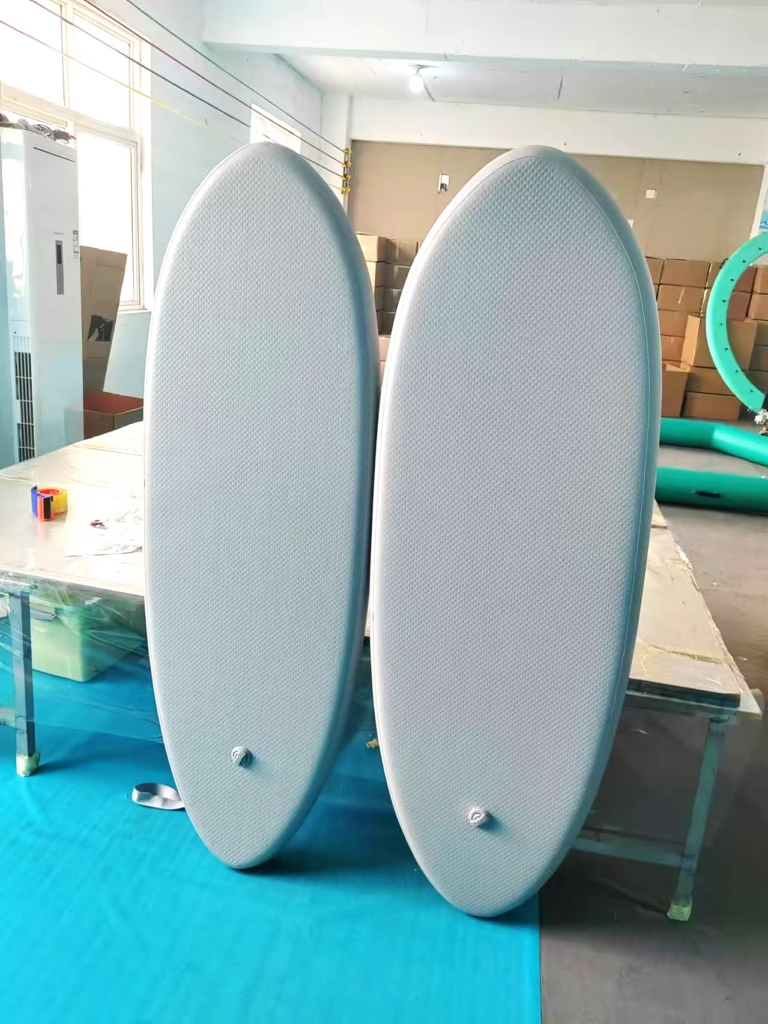
A drop-stitch floor is a high-pressure inflatable panel made from two fabric layers connected by thousands of internal threads. When inflated, these threads keep the upper and lower surfaces at a fixed distance, allowing the panel to remain flatter and more rigid than a conventional low-pressure air floor.
For inflatable boats, kayaks and packrafts, a properly designed drop-stitch floor can improve the feel of the product without requiring a heavy rigid hull.
Compared with a traditional low-pressure floor, a drop-stitch floor can offer:
A firmer and flatter standing surface
Better load support under the rider or passenger
Reduced flex under normal use
Improved stability when moving inside the boat
Better hull-shape retention
More premium product positioning
A removable component for upgrades and after-sales replacement
A practical way to create entry-level and premium product versions
For inflatable kayaks, the floor may help the hull keep a more defined shape. Depending on the full kayak design, this can improve straight-line tracking, stability and paddling efficiency.
The actual result always depends on the complete product design, including the side chambers, hull profile, floor fit, pressure, rider load and intended water conditions.
Drop-Stitch Floors as Upgrade and Replacement Parts
Many end users search online for replacement or upgraded drop-stitch floors because they already own an inflatable kayak or boat with a removable floor system.
In many cases, the customer is not only replacing a damaged part. They may be looking for a firmer platform, better standing comfort, improved support for fishing or pets, or a way to upgrade an entry-level inflatable to a more premium setup.
This creates an important opportunity for inflatable boat and kayak brands.
Instead of treating a floor as a one-time component, brands can develop a three-level product strategy:
A well-designed replacement-floor program can create long-term accessory sales while helping a brand improve customer satisfaction.
However, a replacement floor should not be treated as a universal product. It must be designed around the correct internal dimensions, taper, thickness, valve position, pressure range and attachment method of the target inflatable model.
Why Compatibility Matters
A replacement drop-stitch floor should be developed for a defined boat or kayak model, not only by approximate length.
Key compatibility factors include:
Internal floor length
Maximum floor width
Minimum width at the bow or stern, if tapered
Floor thickness
Sidewall clearance
Bow and stern shape
Valve type
Valve quantity
Valve position
Target working pressure
Floor retention or attachment method
Drainage or water-flow requirements
Intended rider or passenger load
Clear SKU naming, compatible-model charts, product labeling and measurement instructions can reduce incorrect orders and simplify inventory planning for distributors.
A Market Example
Some established inflatable-kayak brands sell removable high-pressure drop-stitch floors as accessories for specific kayak platforms. The purpose is not only replacement; it is also a performance upgrade.
For example, publicly available product information for Advanced Elements’ RigidForm™ floor describes a high-pressure Dropstitch PVC floor designed for particular kayak models. It is marketed for improved rigidity and for creating a more defined hull chine, which can support tracking and hull-speed performance. One published specification lists a maximum recommended inflation pressure of 6 PSI.paddlinglife+1
This demonstrates why brands should build their own compatible accessory systems instead of treating the floor as a generic piece of inflatable material.
XSEA Tech does not offer or claim compatibility with third-party branded kayak models unless a specific OEM project, drawing and fit verification have been completed.
How Drop-Stitch Floors Improve Boat and Kayak Performance
Drop-stitch floors are used when a brand needs a more rigid platform while preserving the portability of an inflatable product.
Improved Stiffness Under Load
A conventional low-pressure air floor can feel soft or rounded because it relies mainly on inflated chambers. A high-pressure drop-stitch panel holds its shape more effectively due to the internal thread structure.
This can reduce noticeable floor flex when riders stand, kneel, sit, move gear or enter and exit the inflatable craft.
Flatter Deck Surface
A flat floor can improve comfort and usability, especially for:
Fishing kayaks
Recreational inflatable boats
Family boats
Touring kayaks
Rental fleets
Water-access platforms
Multi-user recreational products
The floor can provide a more stable base for bags, coolers, seats, equipment and passengers.
Better Hull-Shape Retention
In kayaks and inflatable boats, a well-fitted drop-stitch floor can help support the intended lower-hull geometry.
Depending on the overall hull design, this may contribute to:
More consistent tracking
Better directional control
Improved paddling efficiency
More predictable handling
A firmer feel on the water
A drop-stitch floor alone cannot guarantee speed or handling improvements. The side chambers, bow profile, rocker, fin setup, water conditions and user load all influence on-water performance.
Premium Product Positioning
For brands, a drop-stitch floor can support a more premium product story:
Standard inflatable floor

→ Entry-level recreational model→ Premium comfort, rigidity and performance model
This gives brands a way to create product tiers without developing a completely separate boat platform.
PVC vs TPU Drop-Stitch Floors
Drop-stitch fabric generally consists of two base layers connected by internal threads and combined with airtight coating or film systems. PVC and TPU are two common material directions for inflatable-product projects.
The right selection depends on budget, target market, desired weight, operating environment, seam technology, expected lifespan and brand positioning.
PVC Drop-Stitch Floors
PVC is commonly used for mainstream inflatable boats, kayaks, docks, floors and recreational products.
For many OEM boat and kayak projects, PVC offers a practical balance of cost, durability, processing familiarity and broad market acceptance.
PVC can be appropriate for:
Recreational inflatable boats
Inflatable kayak floors
Rental-oriented products
Standard boat-floor programs
Mid-range branded products
Replacement-floor accessories
Commercial products where cost control is important
TPU Drop-Stitch Floors
TPU may be selected for projects where a brand prioritizes lower-temperature flexibility, weight reduction, specific material positioning or a more specialised product direction.
However, TPU is not automatically the right choice for every project. It usually involves higher material cost and requires the fabric, film, joining process and product design to be matched carefully.
TPU can be considered for:
Lightweight outdoor products
Premium packrafts
Cold-weather applications
Specialised marine products
Brands with specific material-positioning goals
Projects where low weight is a major priority
XSEA Tech can help compare PVC and TPU options based on your target cost, product use, floor dimensions and required order volume.
Pressure, Thickness and Stiffness
Working pressure is one of the most important specifications for a drop-stitch floor, but it cannot be selected independently.
The suitable pressure depends on:
Floor length and width
Finished thickness
Drop-stitch fabric construction
Coating or film system
Sidewall and rail design
Valve type
Seam and reinforcement design
Intended use
Maximum rider or passenger load
Water conditions
Safety margin required for the product
Typical Pressure Ranges
Many removable kayak drop-stitch floors operate around:
4–8 PSISome full drop-stitch kayak structures and SUP-style panels may operate at higher pressures, depending on the construction.
Traditional low-pressure inflatable floors typically operate at much lower pressure.
Always follow the pressure printed on the product, valve label or user manual. A general pressure range should never replace the tested maximum pressure for a specific floor design.
For reference, a publicly described Advanced Elements removable RigidForm™ Drop-Stitch Floor lists a maximum recommended inflation pressure of 6 PSI.
How Thickness Affects Product Design
A thicker floor can increase stiffness and raise the deck height, but it also affects:
Internal space inside the hull
Side-chamber clearance
Rider seating position
Center of gravity
Floor weight
Packed volume
Compatibility with seats and accessories
Compatibility with an existing kayak or boat design
For many kayak and boat floor projects, thickness may be around:
5 cm

7 cm

10 cm
The final thickness should be selected according to the internal hull geometry and expected load.
Stiffness Is More Than PSI
Two floors inflated to the same pressure can feel very different.
Stiffness is influenced by:
Core construction
Thread density
Fabric quality
Coating thickness
Rail reinforcement
Floor dimensions
Floor thickness
Inflation pressure
Product shape
Load distribution
Internal support from the boat or kayak structure
For this reason, brands should evaluate samples under real load, in real water conditions, before approving production.
Custom Drop-Stitch Floor Options
XSEA Tech develops custom drop-stitch floors based on the target inflatable product, use scenario and brand positioning.
Common customization options include:
Custom length, width and thickness
Rectangular, tapered or custom-outline shapes
Bow and stern cut-outs
PVC or TPU material systems
Different surface textures
EVA anti-slip deck pads
Single or multiple valve configurations
Valve type and valve placement
Reinforced edge rails
Abrasion-resistant bottom layers
D-rings and attachment points
Straps, webbing or mounting features
Drainage cut-outs
Seat or accessory compatibility
Custom color options
Logo printing
Private-label packaging
Repair kits
User manuals
Original-equipment, upgrade-floor and replacement-floor SKU planning
Custom Shape and Fit
For a floor used inside an inflatable kayak or boat, the shape must be designed around the internal hull.
A rectangle is not always sufficient. Many products require:
Tapered bow sections
Tapered stern sections
Rounded corners
Side cut-outs
Valve clearances
Seat-mount clearances
Specific retention points
Drainage openings
A CAD drawing is ideal, but a clear measurement sheet, photo and internal hull dimensions can also help begin the OEM evaluation process.
Drop-Stitch Floors for Different Applications
Inflatable Boat Floors
For inflatable boats and dinghies, a drop-stitch floor can provide a flatter, firmer deck for passengers, gear and standing use.
It may be suitable for:
Recreational dinghies
Tender boats
Fishing boats
Touring inflatable boats
Family leisure boats
Commercial support boats
Rental boats
Marine accessory programs
Important design points include floor width, side-tube clearance, drainage, load distribution, anti-slip surface and the attachment method inside the boat.
Inflatable Kayak Floors
For inflatable kayaks, a removable drop-stitch floor can improve the feel underfoot and help support hull shape.
It may be suitable for:
Recreational kayaks
Touring kayaks
Tandem kayaks
Fishing kayaks
Canoe-kayak hybrids
Rental kayaks
Premium upgrade programs
The most important factors are internal fit, floor thickness, valve position, seat compatibility, bow and stern taper and the interaction between the floor and side chambers.
Packraft Floors
Packraft projects often require a careful balance between stiffness and low packed weight.
For packrafts, brands may prioritize:
Low weight
Small packed size
Cold-weather flexibility
Simple inflation
Field repairability
Abrasion resistance
Compatibility with lightweight hull materials
Not every packraft requires a drop-stitch floor. For a high-performance or premium packraft, however, it can provide a useful product-positioning option.
Rafts and Whitewater Products
For rafts and whitewater applications, the floor must be designed around specific handling requirements.
A flat drop-stitch floor can provide a firm, dry and comfortable platform. However, brands should evaluate the effect on drainage, lateral movement, wave response, load distribution and intended river conditions.
Whitewater products should be sampled and tested under relevant use conditions before final specifications are approved.
Welding vs Gluing: What Brands Should Evaluate
Inflatable products may use welding, adhesive bonding or a combination of joining methods, depending on the material system, product geometry and structural requirements.
The best method depends on more than the words “welded” or “glued.”
Welding
For compatible PVC or TPU material systems, welding can provide consistent joints and reduce reliance on adhesive bonding.
Common welding approaches may include heat-based or radio-frequency processes, depending on the selected materials and production design.
Potential advantages include:
Consistent seam production when process parameters are controlled
Reduced dependence on adhesive curing
Potentially lower exposure to adhesive ageing in suitable constructions
Efficient repeat production for compatible designs
Welding must be carefully controlled. Heat, pressure, speed and material compatibility affect the result. Incorrect welding conditions can damage material layers or reduce seam performance.
Adhesive Bonding
Adhesive bonding remains widely used in inflatable-product manufacturing, particularly where geometry, materials or assembly steps make it appropriate.
A well-designed glued seam can be durable when the overlap width, adhesive system, surface preparation, curing conditions and reinforcement layout are correctly controlled.
What Matters Most
When selecting a construction method, brands should evaluate:
Material compatibility
Seam overlap width
Reinforcement design
Rail construction
Adhesive or welding process control
Pressure testing
Load testing
Abrasion resistance
Long-term durability requirements
Intended operating environment
The joining method alone does not define product quality. The complete seam system and quality-control process are what matter.
Sample Testing Before Mass Production
A sample should be treated as an engineering test, not only a visual approval item.
Before confirming a custom drop-stitch floor for mass production, brands should test:
Floor fit inside the inflatable hull
Length, width, taper and edge clearance
Valve accessibility
Inflation and deflation convenience
Pressure retention
Stiffness under realistic rider or passenger load
Deflection under standing, kneeling and seated use
Interaction with seats, footrests and accessories
Surface grip
Seam alignment
Reinforcement placement
Floor shape after inflation
Water performance
Packing and folding process
Product weight
Repairability
Color and logo quality
For a replacement or upgrade-floor program, it is especially important to test the floor with the exact kayak or boat model it is designed to fit.
A floor that is only a few centimeters too long, too wide or too thick may fold incorrectly, push against side chambers, block fittings or create poor handling.
Quality Control for OEM Drop-Stitch Floors
Quality control should be confirmed according to the product category, material system and buyer requirements.
Typical QC items may include:
Raw-material inspection
Visual inspection of fabric and coating surfaces
Dimension checks
Valve installation checks
Rail and edge-reinforcement inspection
Seam inspection
Air-leak inspection
Pressure-retention testing
Surface and print-quality inspection
Accessory verification
Packaging inspection
Random load or functional testing, where required
Final product labeling and SKU verification
For replacement-floor programs, labels should clearly identify:
Product SKU
Compatible boat or kayak model
Floor dimensions
Recommended working pressure
Maximum pressure
Valve type
Basic inflation and care instructions
Safety warnings
Batch or production reference, where required
What Information Is Needed for an OEM Quote?
To prepare an accurate quotation for a custom drop-stitch floor, please provide as much of the following information as possible:
Required floor length in cm
Maximum width in cm
Minimum width in cm, if the floor is tapered
Finished thickness in cm
Floor shape: rectangular, tapered, rounded, pointed or custom outline
Photo, CAD drawing or technical sketch
Internal dimensions of the inflatable boat, kayak or packraft
Target working pressure
Intended use: boat, kayak, raft, packraft, fishing, touring, rental or other
Expected rider or passenger load
PVC or TPU preference
EVA deck pad requirement
Valve quantity, valve type and valve position
Reinforcement requirements
D-rings, straps, cut-outs or mounting points
Logo, color and packaging requirements
Required repair kit or accessory package
Initial order quantity
Estimated annual demand
Target country or market
Required testing, documentation or compliance requirements
Target delivery schedule
With these details, we can recommend an appropriate construction, discuss sampling and provide an OEM quotation based on the confirmed project scope.
Frequently Asked Questions
What is the difference between a drop-stitch floor and a normal inflatable floor?
A conventional inflatable floor usually uses lower-pressure air chambers and may feel softer under load. A drop-stitch floor uses thousands of internal threads to hold its upper and lower surfaces apart, allowing it to form a flatter, higher-pressure and more rigid panel.
Is a drop-stitch floor suitable for inflatable boats?
Yes. A drop-stitch floor can be suitable for inflatable boats when it is designed for the correct internal hull dimensions, target load, floor thickness, pressure range and attachment method.
Can a drop-stitch floor improve inflatable kayak performance?
A well-fitted drop-stitch floor can improve stiffness and help support the intended hull shape. Depending on the kayak design, this may contribute to more consistent tracking, stability and paddling efficiency.
What pressure should a drop-stitch kayak floor use?
The correct pressure depends on the specific construction. Many removable kayak floor systems operate in the approximate 4–8 PSI range, but buyers must follow the maximum pressure stated for the specific product. Pressure should never be guessed based on another brand’s product.
PVC or TPU: which is better for a drop-stitch floor?
PVC is generally the practical choice for mainstream inflatable boat and kayak projects because it balances cost and durability. TPU can be considered for specialised, lightweight or low-temperature-flexibility projects, but it usually costs more and requires careful material and production matching.
Can I develop a replacement floor for an existing kayak model?
Yes, but the floor should be developed around the exact internal dimensions, shape, thickness, valve layout and attachment method of the target kayak model. It should be sampled and tested with the actual hull before production.
Can I sell a drop-stitch floor as a premium upgrade accessory?
Yes. Many brands use a removable drop-stitch floor as a premium upgrade option for customers who want increased rigidity, standing comfort and a more refined product feel.
Do you offer OEM logo and packaging?
OEM options may include logo printing, color selection, packaging, manuals, repair kits and SKU labeling, depending on order quantity and project requirements.
How do I start a custom drop-stitch floor project?
Send us your drawing, measurements, product photos, target application, quantity and preferred material. We will review the project and recommend the appropriate construction, sampling process and quotation approach.
Start Your Custom Drop-Stitch Floor Project
XSEA Tech supports OEM drop-stitch floor development for inflatable boat brands, kayak brands, marine accessory distributors, outdoor-product companies and private-label projects.
Whether you need an original floor for a new boat model, a premium upgrade floor or a replacement-parts program, we can help you evaluate materials, dimensions, pressure ranges, valve layouts, reinforcements, packaging and quality-control requirements.
Send us your floor drawing, target product dimensions and expected order quantity to begin.


Learn More
Learn more about TPU Packraft manufacturing capabilities.

Related Solutions
Discover our full range of Inflatable Water Sports products.