Efoil OEM Manufacturing – Custom Electric Hydrofoil
Looking to develop your own eFoil product or launch an electric hydrofoil under your brand?
XSEA Tech provides eFoil OEM and ODM manufacturing for water sports brands, distributors, retailers, rental operators and commercial projects.
We can work with your product requirements and help coordinate the eFoil platform, board construction, propulsion system, battery, hydrofoil components, branding, packaging and production.
From initial requirements and sample development to testing and mass production, we provide a structured OEM process for bringing an eFoil product to market.
[Start Your Efoil OEM Project]
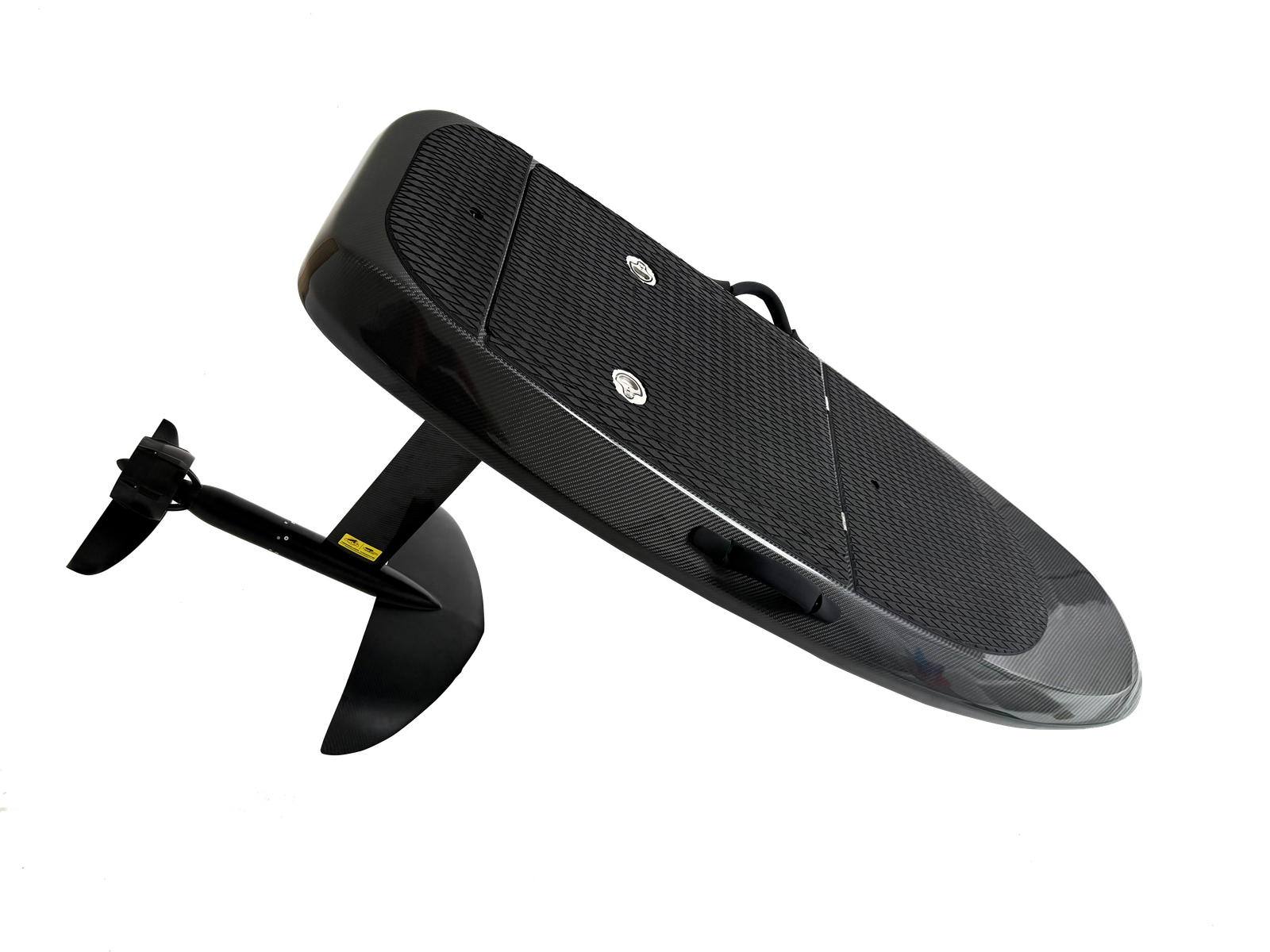
What Can We Customize?
An eFoil is a complete system rather than a single product. Depending on the project, different parts of the product can be configured or customized.
Board
Choose a suitable board platform based on your target market, rider level and product positioning.
Available options may include:
- EPP board construction
- Carbon fiber composite construction
- Different board sizes and shapes
- Board graphics and colors
- Surface finishing
- Brand logos
Propulsion System
The propulsion system can be selected according to the required performance and application.
Configuration may include:
- Motor power
- ESC
- Cooling system
- Propeller
- Propeller guard
- Wiring and connectors
Battery
Battery configuration can be discussed according to the required riding time, system power, board design and target market.
Options may include:
- Battery capacity
- Voltage
- Battery supplier
- Battery enclosure
- Charging system
- Required transportation documentation
Hydrofoil
The mast and wing configuration affects lift, stability, acceleration and riding characteristics.
Depending on the project, we can discuss:
- Mast length
- Front wing
- Rear wing
- Wing configuration
- Materials
- Product positioning
Remote Control
The control system can be matched to the selected eFoil electronics.
Depending on the configuration, functions may include:
- Multiple speed levels
- Battery information
- GPS speed display
- Cruise control
- Wireless communication
Branding & Packaging
For private-label projects, branding can be applied to suitable product components and packaging.
Options may include:
- Logo
- Board graphics
- Product colors
- Remote branding
- Packaging design
- User manuals
- Labels and product identification
Our Efoil OEM Manufacturing Process
A successful OEM project starts with a clear product definition.
We use a structured process to reduce unnecessary revisions and confirm the product configuration before mass production.
1. Define Product Requirements
We first confirm:
- Target market
- Intended application
- Rider profile
- Product positioning
- Required performance
- Expected quantity
- Target configuration
If you already have drawings, specifications or a reference product, these can be reviewed as part of the project requirements.
2. Select the Efoil Platform
Based on the project requirements, we determine a suitable board and system platform.
For example:
- EPP eFoil for beginner and rental applications
- Carbon fiber eFoil for premium and performance-oriented markets
The selected platform provides the starting point for further configuration.
3. Configure the Electric System
The motor, ESC, battery and control system need to work together as one system.
We confirm the main electrical specifications and compatibility before proceeding to sample production.
Key considerations include:
- Motor power
- Battery voltage and capacity
- ESC specification
- Cooling
- Propulsion configuration
- Remote control
- Charging system
4. Configure the Hydrofoil System
The mast and wing configuration is selected according to the board, propulsion system and intended riding characteristics.
The goal is to create a balanced system rather than simply selecting individual components based on specifications.
5. Prototype & Sample
After the main configuration is confirmed, a sample can be prepared for evaluation.
Depending on the project, the sample may be used to evaluate:
- Appearance
- Board construction
- Assembly
- Riding characteristics
- Electrical performance
- Remote control
- Battery performance
- Branding
Sample development helps identify required changes before larger-scale production.
6. Testing & Product Confirmation
Before mass production, the selected configuration should be checked against the agreed requirements.
Testing may include:
- Electrical system testing
- Charging testing
- Remote communication
- Motor operation
- Waterproofing checks
- Board inspection
- Hydrofoil assembly
- Functional testing
- Water testing where applicable
Any required changes can be discussed and confirmed before production.
7. Branding & Packaging
Once the product configuration is confirmed, we can prepare the required branding and packaging elements.
Depending on the project:
- Logo application
- Board graphics
- Product labels
- Packaging
- User manuals
- Product documentation
8. Mass Production
After the sample and specifications are approved, production can be scheduled according to the confirmed order quantity and configuration.
Production follows the approved product specification to maintain consistency between the sample and bulk units.
Efoil OEM for Different Business Models
Our OEM service is suitable for different types of eFoil projects.
Water Sports Brands
Develop an eFoil product under your own brand and build a dedicated product line for your target market.
Distributors & Dealers
Select a suitable existing platform and configure the product for your local market.
Rental Operators
Develop a commercial configuration focused on durability, ease of use, serviceability and fleet operation.
Resorts & Water Sports Centers
Configure eFoil products for guest activities, water sports programs and commercial operations.
New Efoil Brands
Start with an existing platform and develop your own product positioning, branding and packaging without building an entire manufacturing system from scratch.
Existing Platform or Custom Development?
Not every OEM project requires a completely new eFoil.
For many businesses, starting from an existing platform can reduce development time and cost while still allowing product-level customization.
Existing Platform
Suitable when you need:
- Faster product launch
- Lower development cost
- Proven configuration
- Branding and packaging
- Selected component changes
Custom Development
Suitable when you need:
- A unique board design
- Different dimensions
- Different propulsion requirements
- A new battery configuration
- Special riding characteristics
- A differentiated product platform
We can evaluate the project requirements first and determine whether an existing platform or a more customized development approach is more practical.
What We Need From You
To evaluate an eFoil OEM project efficiently, it is helpful to provide as much of the following information as possible:
- Target market
- Intended application
- Target customers
- Product reference or similar model
- Desired board type
- Required speed
- Riding time
- Battery requirements
- Branding requirements
- Estimated order quantity
- Target delivery market
You do not need to have every specification finalized before contacting us.
If some requirements are still open, we can first discuss the product direction and identify the main specifications that need to be confirmed.
OEM Samples & MOQ
Sample orders can be arranged for product evaluation and market testing before larger production.
MOQ depends on the selected platform, configuration and level of customization.
For standard configurations, the production process can usually be more straightforward. More extensive product development or custom components may require additional development time and minimum quantities.
We confirm sample cost, production MOQ and lead time according to the actual project requirements.
Efoil OEM Quality & Production Support
OEM production is not only about adding a logo to an existing product.
A reliable eFoil requires coordinated production across:
- Board construction
- Electrical components
- Battery system
- Motor and ESC
- Hydrofoil components
- Remote control
- Assembly
- Testing
- Packaging
Our role is to coordinate these parts into a complete product configuration and maintain consistency between the approved sample and production units.
Private Label Efoil
If you already have a brand and want to add an eFoil product to your range, we can supply suitable eFoil platforms for private-label projects.
Private-label support may include:
- Brand logo
- Board graphics
- Product colors
- Packaging
- Manuals
- Product labels
- Selected component configuration
For more extensive changes, the project can be evaluated as a custom OEM development.
Efoil OEM FAQ
What is eFoil OEM manufacturing?
Efoil OEM manufacturing allows a business to sell an electric hydrofoil product under its own brand while working with a manufacturer for product supply, configuration, branding and production.
Can you customize the eFoil board?
Yes. Depending on the project, board size, shape, construction, graphics and other specifications can be discussed.
Can I use my own logo?
Yes. Logo application and private-label branding are available for suitable orders.
Can you customize the motor and battery?
The motor, ESC and battery configuration can be discussed according to the required performance, riding time and selected platform.
Can I order a sample before mass production?
Yes. Samples can be arranged for product evaluation, testing and market validation before larger production.
What is the MOQ for eFoil OEM?
MOQ depends on the product platform, configuration and customization requirements. We confirm the applicable MOQ for each project rather than applying one fixed quantity to every OEM order.
Can you develop a completely new eFoil?
Custom development can be evaluated for projects requiring significant changes to the board, propulsion system, battery or other major components. In many cases, starting from an existing platform is a more efficient approach.
How long does eFoil OEM production take?
Lead time depends on whether you are selecting an existing platform, modifying an existing configuration or developing a new product. Sample and mass-production schedules are confirmed after the product specifications are agreed.
Start Your Efoil OEM Project
Have an eFoil product idea, reference model or existing specification?
Send us your requirements, target quantity and market.
We can review the project and recommend the most practical product configuration, development approach and next steps.
[Start Your Efoil OEM Project]