Drop Stitch Floor Materials Explained: PVC, TPU, GSM, Denier, and Construction

Choosing the right drop stitch floor materials requires more than just “PVC or TPU.” You need to understand:

  • Fabric construction: knitted vs. woven

  • Fabric weight: 2400 gsm, 2600 gsm, or higher

  • Yarn size: 210D, 420D, 840D, etc.

  • Coating type: PVC vs. TPU

  • Thickness, density, and performance requirements

As a drop stitch floor manufacturer, we work with a wide range of material specifications to meet different application needs. This guide explains the key material parameters and how to choose the right combination for your product.

What Is a Drop Stitch Floor Made Of?

A drop stitch floor consists of thousands of high-strength polyester threads connecting two layers of fabric.

When inflated to high pressure, these threads prevent the material from expanding outward, allowing the floor to remain flat and rigid.

Typical construction includes:

  1. Top PVC-coated fabric
  2. Bottom PVC-coated fabric
  3. Internal drop stitch threads
  4. Side reinforcement strips
  5. Welding or adhesive bonding
  6. Additional wear-resistant layers (optional)

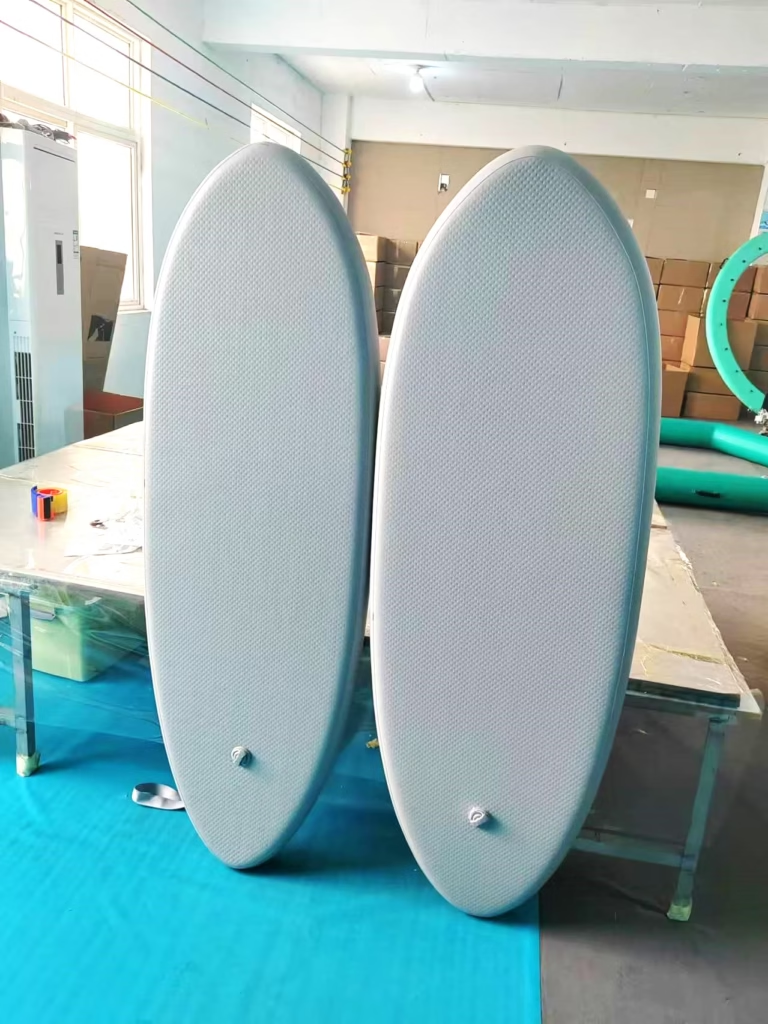
floor material  drop stitch floor materials

TPU drop stitch All-Around Inflatable SUP Board,paddle board Pacific 10.8ft Ultra-Stab – Surfwaveboard

Base Fabric Construction: Knitted vs. Woven

Knitted Drop Stitch Fabric

Knitted drop stitch fabric is made by interlocking loops of yarn.

Advantages:

  • Better flexibility and drape

  • Easier to form into complex shapes

  • Good for applications requiring some conformity

Typical Use:

  • Inflatable SUPs

  • General-purpose inflatable floors

  • Products requiring moderate rigidity

Woven Drop Stitch Fabric

Woven drop stitch fabric is made by weaving yarns in a regular pattern.

Advantages:

  • Higher tensile strength

  • Better dimensional stability

  • Less stretching under pressure

  • Better for high-load, high-rigidity applications

Typical Use:

  • Heavy-duty inflatable boats

  • Floating docks and platforms

  • Industrial and rescue equipment

  • Products requiring maximum rigidity

Knitted vs. Woven Summary:

FeatureKnitted FabricWoven Fabric
StrengthGoodHigher
FlexibilityBetterStiffer
Dimensional StabilityModerateHigher
Best ForSUPs, general useHeavy-duty, high-load

Two Core Drop Stitch Outer Skin Floor Materials: PVC vs TPU

Drop stitch floor consists of top fabric layer + bottom fabric layer + thousands of vertical drop stitch threads inside. Outer coating material directly decides durability, air tightness, abrasion resistance and service lifespan.

1.1 PVC Drop Stitch Fabric

PVC coated polyester fabric is the most cost-effective choice for entry-level and commercial floating platforms, recreational inflatable docks and budget inflatable boats.
  • Pros: Low production cost, excellent waterproof performance, easy high-frequency hot air welding, rich customizable color options, stable supply for large bulk orders.
  • Cons: Heavier weight than TPU, poorer low-temperature resistance, prone to slight hardening under long-term cold environment, not ideal for ultralight packraft production.
  • Common application: Commercial water park floating mat, modular inflatable dock, family leisure inflatable dinghy.

TPU Drop Stitch Fabric

TPU thermoplastic polyurethane coated nylon/polyester is premium-grade material widely adopted on high-end packrafts, whitewater inflatable boats and high-load commercial floating floors.
  • Pros: Ultralight weight, outstanding tear & puncture resistance, flexible under extreme hot & cold weather, superior air retention, eco-friendly and compliant with REACH & RoHS certification standards.
  • Cons: Higher raw material and processing cost than PVC.
  • Common application: Ultralight hiking packraft floor, professional whitewater inflatable boat, high-end custom floating platform for outdoor brands.
Factory Tip: Most of our custom OEM orders for outdoor branded packrafts choose full TPU drop stitch floor, while commercial water park bulk projects prefer durable cost-saving PVC drop stitch floors.

Understand GSM & Denier: Key Fabric Thickness & Density Indicators

When suppliers list drop stitch fabric specs, denier and GSM are two critical reference numbers that determine fabric toughness.

2.1 Denier (D)

Denier marks the thickness of base polyester/nylon yarn: higher denier = thicker inner fiber = stronger anti-tear base cloth.
  • Typical drop stitch denier range: 210D, 420D, 600D, 840D.

Common TPU Drop Stitch Floor Denier Options

210D TPU Drop Stitch Floor

  • Yarn size: 210 denier

  • Weight: Lighter

  • Strength: Good for light to medium duty

  • Best for:

    • Lightweight inflatable SUPs

    • Portable inflatable floors

    • Products where weight is critical

    • Entry-level to mid-range premium products

420D TPU Drop Stitch Floor

  • Yarn size: 420 denier

  • Weight: Moderate

  • Strength: Medium to heavy duty

  • Best for:

    • Mid-range to high-end inflatable SUPs

    • Inflatable boats and kayaks

    • Floating platforms

    • Gymnastics air tracks

    • Professional and commercial use

840D TPU Drop Stitch Floor

  • Yarn size: 840 denier

  • Weight: Heavier

  • Strength: Heavy duty

  • Best for:

    • Professional-grade inflatable boats

    • Heavy-duty floating docks

    • Rescue and military equipment

    • Industrial applications

    • Maximum durability requirements

Higher Denier Options (1000D, 1680D, etc.)

For extreme-duty applications:

  • 1000D, 1680D, or higher

  • Maximum strength and abrasion resistance

  • Used in military, rescue, and industrial applications

2.2 GSM (Gram Per Square Meter)

GSM measures total fabric weight per square meter, including base cloth + coating layer, directly reflecting overall fabric thickness.

PVC-Coated Drop Stitch Floor: GSM Options

PVC (polyvinyl chloride) is the most common coating for drop stitch floors. The key parameter is GSM (grams per square meter), which indicates fabric weight and generally correlates with strength and durability.

Common PVC Drop Stitch Floor GSM Options

2400 gsm PVC Drop Stitch Floor

  • Typical thickness: 0.6–0.8 mm

  • Strength: Good for light to medium duty

  • Weight: Lighter, more portable

  • Best for:

    • Entry-level inflatable SUPs

    • Light-duty inflatable floors

    • Camping and recreational use

    • Budget-friendly products

2600 gsm PVC Drop Stitch Floor

  • Typical thickness: 0.7–0.9 mm

  • Strength: Medium to heavy duty

  • Weight: Moderate

  • Best for:

    • Mid-range inflatable SUPs

    • Inflatable boats and kayaks

    • Floating platforms

    • Gymnastics air tracks

    • General-purpose commercial use

2800–3000+ gsm PVC Drop Stitch Floor

  • Typical thickness: 0.8–1.2 mm

  • Strength: Heavy duty

  • Weight: Heavier, more robust

  • Best for:

    • Professional-grade inflatable boats

    • Heavy-duty floating docks

    • Industrial and rescue equipment

    • High-traffic commercial applications

    • Products requiring maximum durability

Higher GSM Options (3200 gsm, 3400 gsm, etc.)

For extreme-duty applications, we can supply even higher GSM materials:

  • 3200 gsm, 3400 gsm, or higher

  • Maximum strength and abrasion resistance

  • Used in military, rescue, and industrial applications

Practical Buying Tip: Never judge quality only by GSM; same GSM can use low-quality thin base cloth plus thick cheap coating. Always match denier together with GSM for accurate quality evaluation.

PVC GSM vs. TPU Denier: How to Compare

PVC is typically specified by GSM, while TPU is typically specified by denier. Here’s a rough performance comparison:

Material OptionApprox. StrengthWeightBest For
2400 gsm PVCLight–MediumLightEntry-level, budget products
2600 gsm PVCMedium–HeavyModerateMid-range, commercial
2800–3000+ gsm PVCHeavyHeavyProfessional, industrial
210D TPULight–MediumLightLightweight premium products
420D TPUMedium–HeavyModerateMid–high-end, commercial
840D+ TPUHeavyHeavyProfessional, extreme-duty

Recommended Related Guides

If you want to learn more, you may also find these articles useful:

Scroll to Top