Packrafts have become increasingly popular among outdoor enthusiasts thanks to their lightweight design, portability, and versatility. Whether you are planning a multi-day backcountry expedition, whitewater adventure, fishing trip, or recreational lake paddling, choosing the right packraft can significantly impact your overall experience.
However, many buyers quickly discover that selecting a packraft is not simply about choosing the lightest model or the cheapest option. The ideal packraft requires a careful balance between weight, durability, and on-water performance.
In this guide, we will explain the key factors that affect packraft selection and help you understand which features matter most for different types of users and environments.
Why Packraft Selection Matters
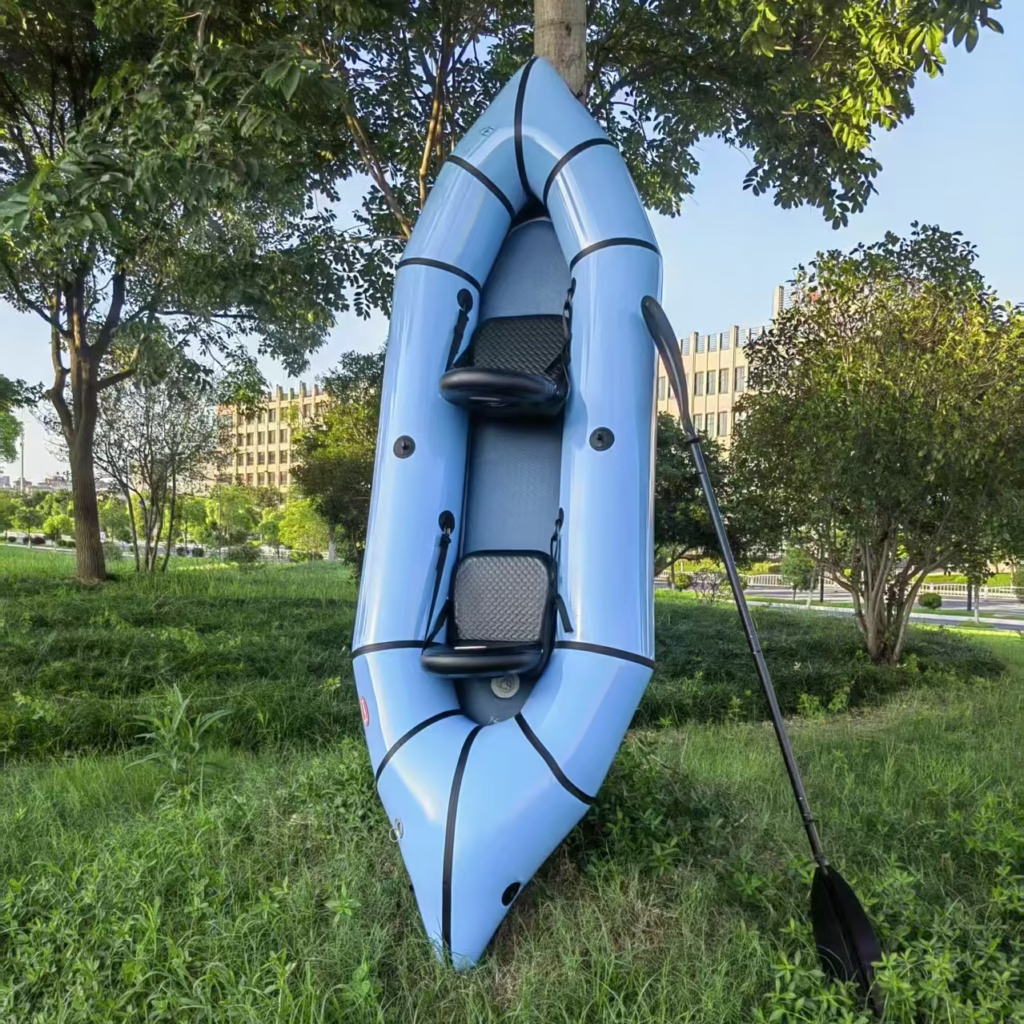
Unlike traditional kayaks or inflatable boats, packrafts are specifically designed for portability. Most models are lightweight enough to carry in a backpack while still offering enough buoyancy and stability for rivers, lakes, and remote waterways.
But every design choice involves trade-offs:
- Lighter materials improve portability but may reduce abrasion resistance.
- Stronger fabrics increase durability but add weight.
- Streamlined hull designs improve paddling efficiency but may sacrifice stability for beginners.
Understanding these compromises is essential before making a purchase.
1. Weight: Portability vs Practical Use
Weight is often the first specification buyers notice when comparing packrafts.
For hikers, bikepackers, and wilderness travelers, reducing pack weight is critical. Ultralight packrafts can weigh as little as 2–3 kg, making them ideal for long-distance carrying and alpine expeditions.
However, extremely lightweight models are not always the best choice for every environment.
Lightweight Packrafts Are Best For
- Backpacking trips
- Long hiking approaches
- Adventure racing
- Calm lakes and slow-moving rivers
- Users prioritizing compact storage
Potential Limitations
Ultralight fabrics are generally thinner and less resistant to:
- Sharp rocks
- River abrasion
- Heavy cargo loads
- Frequent commercial use
If the raft will be used regularly in rocky rivers or demanding whitewater conditions, sacrificing a small amount of weight for stronger construction is often worthwhile.
2. Durability: Material Quality Makes the Difference
Durability is one of the most important long-term considerations when choosing a packraft.
The overall lifespan of a packraft largely depends on:
- Fabric material
- Coating technology
- Seam construction
- Floor reinforcement
- Manufacturing quality
Common Packraft Materials
TPU (Thermoplastic Polyurethane)
TPU is widely considered the premium material for modern packrafts.
Advantages include:
- Excellent abrasion resistance
- High flexibility
- Lightweight construction
- Better cold-weather performance
- Easier repairability
TPU packrafts are especially popular among serious outdoor users because they offer a strong balance between weight and durability.
PVC
PVC is commonly used in entry-level inflatable products.
Advantages:
- Lower manufacturing cost
- Good air retention
- Strong structural stability
Disadvantages:
- Heavier than TPU
- Less flexible in cold environments
- Harder to pack compactly
For professional packrafting applications, TPU is generally preferred over PVC due to its superior weight-to-strength ratio.
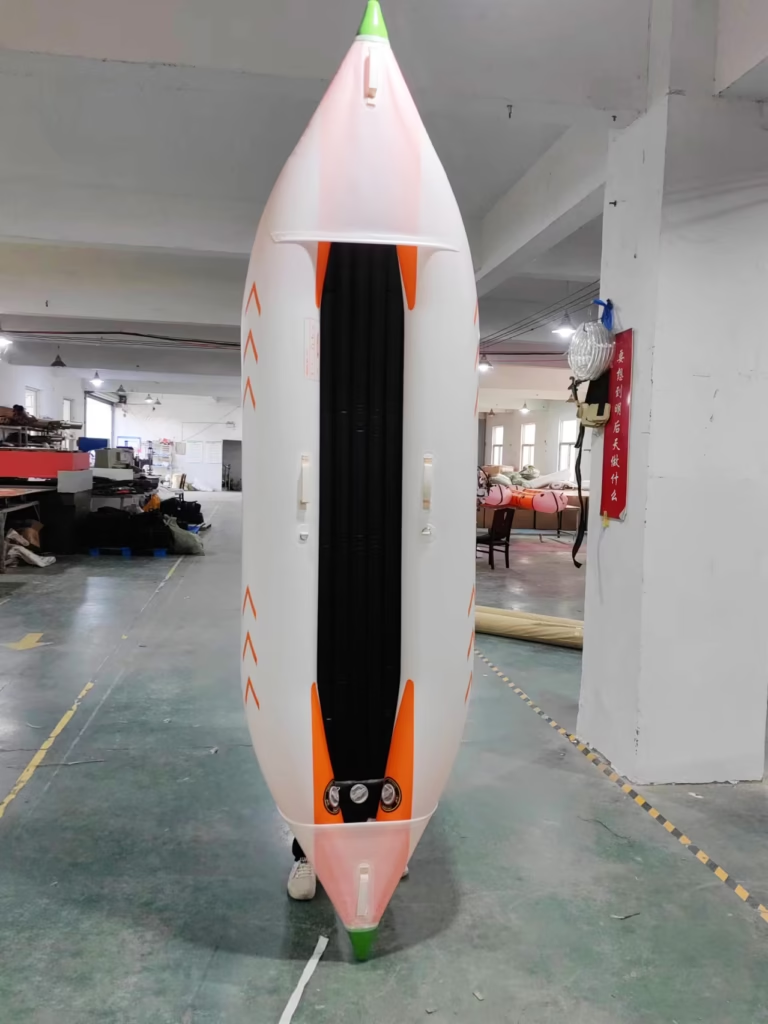
3. Performance: Stability, Speed, and Handling
Performance characteristics vary significantly depending on packraft shape and construction.
Key performance factors include:
Hull Shape
A longer and narrower hull generally provides:
- Better tracking
- Higher paddling efficiency
- Improved speed
A wider hull offers:
- Greater stability
- Easier control for beginners
- Better load capacity
Whitewater Capability
If you plan to use the packraft in whitewater environments, look for features such as:
- Self-bailing systems
- Spray decks
- Reinforced floors
- Thigh straps
- High-volume tubes
These features improve control and safety in rough conditions.
Cargo Capacity
For multi-day expeditions, cargo space becomes extremely important.
Some expedition packrafts include internal storage systems with waterproof zippers, allowing users to store gear inside the tubes to improve balance and reduce deck clutter.
4. Choosing the Right Packraft for Your Activity
Different activities require different packraft priorities.
Backpacking and Hiking
Recommended priorities:
- Lightweight design
- Compact packing size
- TPU material
- Moderate durability
Whitewater Adventures
Recommended priorities:
- Reinforced construction
- Stability
- Self-bailing system
- High durability
Fishing and Recreational Use
Recommended priorities:
- Comfort
- Larger capacity
- Stability
- Easy entry and exit
Expedition and Multi-Day Trips
Recommended priorities:
- Cargo storage
- Balanced weight
- Durable floor materials
- Reliable repairability
5. Material Thickness and Denier Comparison
When evaluating packrafts, many buyers focus only on the material type, such as TPU or PVC. However, the fabric denier (D) is equally important because it directly affects the raft’s weight, durability, stiffness, and on-water handling.
Generally speaking:
- Higher denier fabrics offer better abrasion resistance and structural rigidity.
- Lower denier fabrics reduce total weight and improve portability.
The table below shows the typical balance between weight, durability, and performance for common packraft materials.
| Material / Denier | Weight | Durability | Performance Characteristics |
|---|---|---|---|
| 1000-d PVC | Heavy | Excellent | Very rigid with strong tracking performance |
| 420-d Nylon | Moderate-heavy | Very good | Stiff and responsive handling |
| 210-d Nylon | Moderate | Good | Well-balanced for general outdoor use |
| 70-d Nylon | Light | Lower | Flexible and forgiving, ideal for ultralight applications |
How to Choose the Right Denier
1000D PVC
This material is commonly used for heavy-duty inflatable boats and commercial applications where maximum durability is required. While extremely tough, it is significantly heavier and less compact than nylon-based packrafts.
Best for:
- Rental operations
- Rocky environments
- Heavy cargo loads
- Commercial use
420D Nylon
420D TPU-coated nylon is one of the most popular choices for high-performance packrafts because it balances durability and paddling efficiency very well.
Best for:
- Whitewater
- Expedition use
- Frequent outdoor trips
210D Nylon
210D fabrics provide a good middle ground between portability and reliability. Many recreational and entry-level packrafts use this material configuration.
Best for:
- Recreational paddling
- General outdoor activities
- Mixed conditions
70D Nylon
70D ultralight fabrics are designed primarily for users who prioritize minimal pack weight over maximum durability.
Best for:
- Backpacking
- Adventure racing
- Alpine expeditions
However, users should avoid sharp rocks and abrasive riverbeds when using ultralight materials.
6. OEM and Customization Considerations
For brands, distributors, and commercial buyers, customization is also an important factor.
Many packraft manufacturers now offer OEM and private-label services, including:
- Custom colors
- Logo printing
- Material upgrades
- Accessory configurations
- Packaging customization
When selecting a manufacturing partner, buyers should evaluate:
- Material sourcing capability
- Production consistency
- Quality control standards
- MOQ flexibility
- Experience with international markets
Final Thoughts
Choosing the right packraft is ultimately about understanding your intended usage rather than simply selecting the lightest or most expensive option.
A well-balanced packraft should provide:
- Sufficient durability for the environment
- Acceptable carrying weight
- Stable and efficient on-water performance
- Long-term reliability
For most users, TPU packrafts offer the best balance between portability, strength, and performance, especially for outdoor adventures that involve both hiking and paddling.
Before purchasing, carefully evaluate where and how the packraft will be used. The right combination of weight, durability, and performance will result in a safer, more enjoyable, and more reliable experience on the water.
Looking to develop high-quality packrafts?
We provide:
- TPU and PVC packraft manufacturing
- Advanced heat-welding production
- OEM/ODM customization
- Export-ready quality control
 Contact us for material recommendations and OEM solutions.
Continue Reading
 Explore Products
Contact us for product specifications and OEM solutions.
[  WhatsApp Inquiry ] [
  Email Us ]