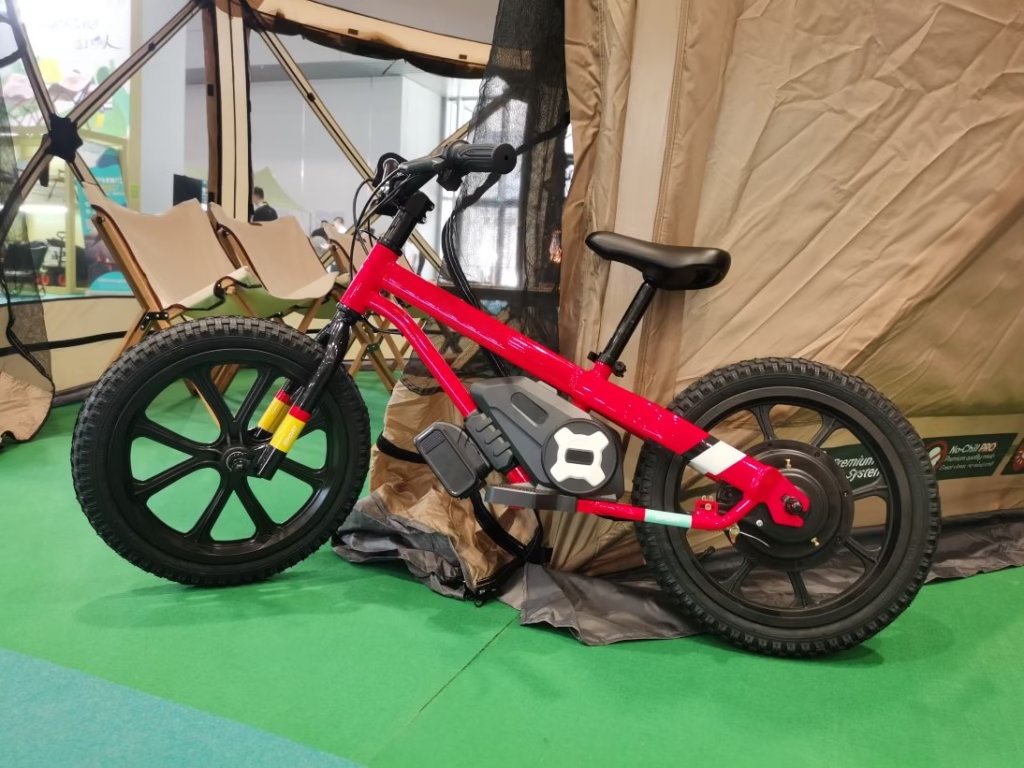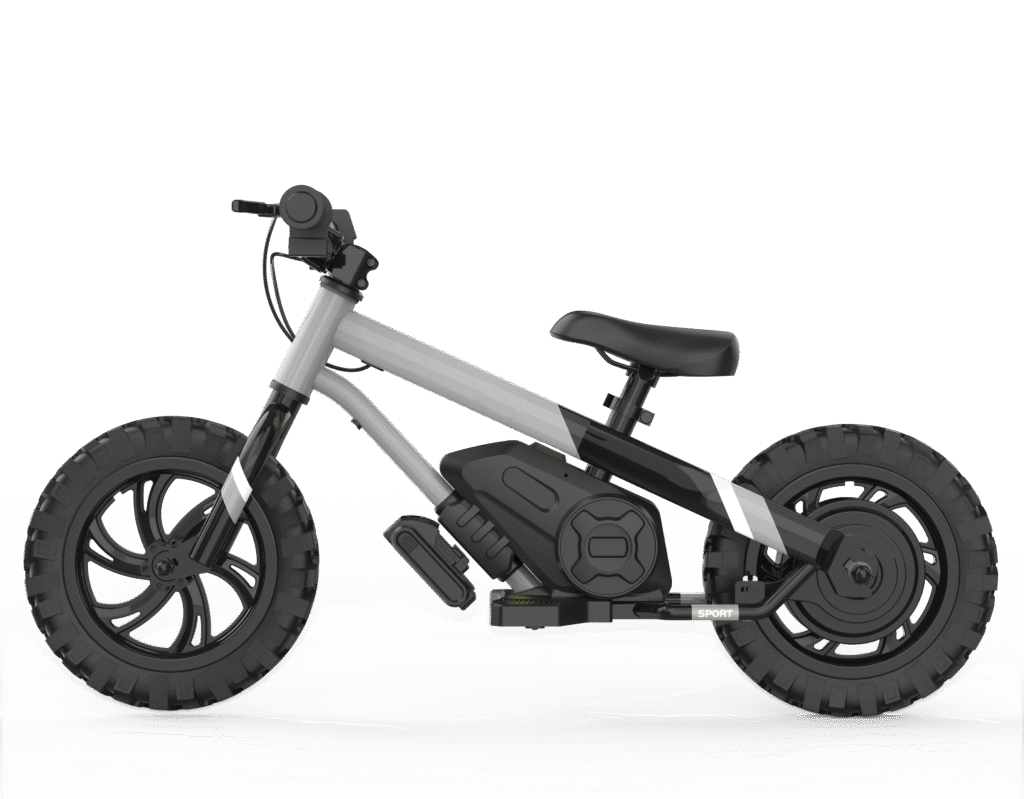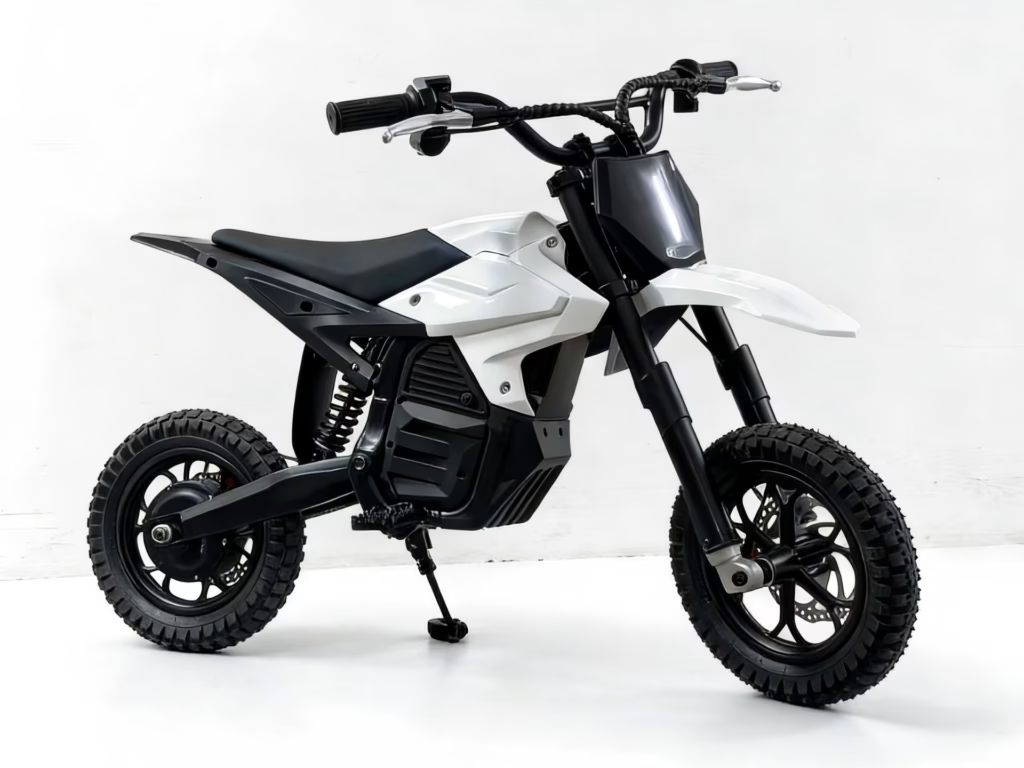
🧭 Executive Summary
The kids electric balance bike industry in 2026 is undergoing a structural transformation.
Once considered a niche toy segment, it is now evolving into a global micro-mobility category focused on:
- Early riding skill development
- Outdoor mobility training
- Battery-powered performance systems
- OEM customization and brand differentiation
Key findings:
- Strong global demand growth in Europe and North America
- Electric balance bikes becoming the core entry product of kids mobility
- Rapid upgrade from 24V systems to 36V+ platforms
- Battery evolution from 18650 to 21700 systems
- OEM manufacturing becoming the dominant business model
👉 The industry is shifting from toy manufacturing → mobility engineering.
2026 Kids Electric Balance Bike Market Overview
The global market is expanding steadily due to structural changes in consumer behavior.
Key growth drivers:
- Parents prioritizing outdoor physical development
- Decline of traditional training-wheel bicycles
- Rising demand for electric mobility products
- Increased awareness of safety and skill training
Market segmentation:
- Premium performance segment (EU/US brands)
- Mid-range OEM products (global distribution)
- Entry-level electric ride-on segment
👉 The category is becoming more structured and performance-driven.
Industry Shift From Toys to Mobility Training Products
Electric balance bikes are no longer positioned as toys.
They are now used for:
- Balance training
- Pre-bicycle learning systems
- Outdoor mobility development
Key shift:
Entertainment → Skill development
👉 This shift is redefining the entire industry value chain.
Battery & Technology Evolution (18650 vs 21700)
Battery systems are one of the most important competitive factors.
Current trend:
- 18650 → entry-level and cost-sensitive models
- 21700 → premium and performance models
Impact on products:
- Longer riding range
- Improved thermal stability
- Higher power output
- Better weight efficiency
👉 Battery technology is now a product positioning tool, not just a component.
Voltage & Motor System Upgrades
Voltage systems are becoming standardized across product tiers:
- 24V → basic entry level
- 36V → mainstream balance bikes
- 48V → high-performance segment
Motor evolution:
- Brushed motors → low-end market
- Brushless motors → industry standard
👉 This defines speed, torque, and riding experience.
Safety & Compliance Trends
Safety regulations are becoming stricter in global markets.
Key certifications:
- CE (Europe)
- ASTM (USA)
- EN71 (Children’s safety standard)
Core safety features:
- Speed limit modes
- Soft-start acceleration
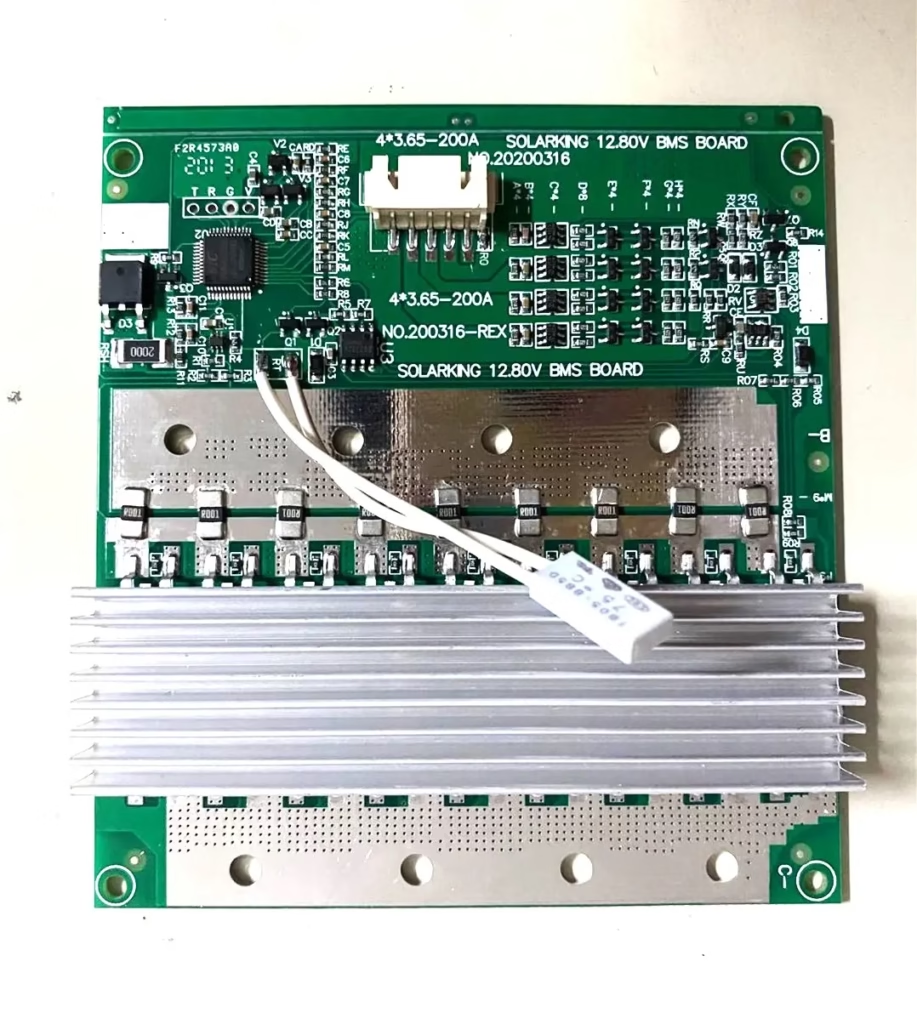
- Battery protection (BMS systems)
- Reinforced frame design
👉 Safety is now a market entry requirement, not a feature.
OEM Manufacturing & Supply Chain Trends
The industry is increasingly OEM-driven.
OEM trends:
- Private label development
- Custom battery configurations
- Motor tuning per market
- Multi-voltage platforms
- Rapid product customization
👉 Buyers are no longer purchasing products—they are building product lines and brands.
Regional Market Differences
Europe:
- Lightweight design focus
- Strong safety standards
- Electric balance bikes leading adoption
North America:
- Performance-focused demand
- Outdoor/off-road usage
- Higher voltage preference
Asia:
- Price-sensitive market
- Strong OEM manufacturing base
Middle East:
- Premium + high-power models
- Strong visual and performance demand
Top 10 Electric Balance Bike Brands & Products (2026 Benchmark)
Below are the most influential brands shaping the global market.
🚲 STACYC (USA)
- Industry leader in performance balance bikes
- Off-road motocross training focus
- Lightweight aluminum frames
👉 Benchmark: high-performance category leader
🚲 Woom (Austria)
- Premium lightweight kids bicycle brand
- Strong ergonomic and safety design
- High-end European positioning
👉 Benchmark: premium lightweight design
🚲 Kuberg (Czech Republic)
- High-power electric off-road bikes
- Dirt bike-inspired engineering
- Strong torque performance
👉 Benchmark: performance + durability
🚲 Segway-Ninebot
- Smart mobility integration
- App-based control systems
- Urban-focused design
👉 Benchmark: smart mobility + tech integration
🚲 Razor (USA)
- Entry-level electric dirt bike leader
- Strong retail distribution
- Affordable mass-market positioning
👉 Benchmark: mainstream accessibility
🚲 Power Wheels
- Large-scale ride-on toy brand
- Entry-level electric mobility systems
- Strong global retail presence
👉 Benchmark: toy-to-mobility transition leader
🚲 Amigo (EU OEM Segment)
- European OEM balance bike brand
- CE-compliant manufacturing
- Mid-range positioning
👉 Benchmark: compliance + OEM stability
🚲 Lemmo
- Urban lightweight electric mobility design
- Minimalist product engineering
- Lifestyle-focused positioning
👉 Benchmark: urban mobility trend
🏭 China OEM Manufacturers (Private Label Segment)
- Flexible customization (24V / 36V / 21700 systems)
- Strong cost advantage
- Fast product development cycles
👉 Benchmark: global supply chain backbone
🚲 Emerging Performance Startups (EU/US niche brands)
- Innovation-driven companies
- Small batch high-performance products
- Strong branding focus
👉 Benchmark: innovation + premium niche
Industry Insights & Competitive Landscape
Across all brands, four clear patterns emerge:
1. Lightweight engineering defines premium segment
→ EU brands dominate this category
2. Performance defines US market demand
→ Off-road and torque-driven products
3. Smart systems are emerging
→ App control + digital integration
4. OEM manufacturers dominate global supply
→ China remains the core production hub
Future Outlook 2026–2030
The industry will continue evolving toward:
- Smart connectivity systems
- Modular/swappable batteries
- AI-assisted safety control
- Lightweight composite materials
- Hybrid learning + mobility systems
👉 The boundary between toy, bicycle, and electric vehicle will fully disappear.
Conclusion
The 2026 kids electric balance bike industry is no longer a toy market.
It has evolved into a structured global micro-mobility industry driven by:
- Technology upgrades
- Safety regulations
- OEM customization
- Brand-driven competition
👉 The future belongs to companies that combine engineering capability + supply chain strength + brand positioning.
Looking to develop or source electric balance bikes?
We provide:
- OEM/ODM electric balance bike solutions
- Lithium battery systems (18650 / 21700)
- Custom motor and frame design
- Global compliance manufacturing
Related Articles