The global demand for inflatable water sports equipment continues to grow rapidly in 2026, especially in the kayak segment. Among all types, drop stitch kayaks have become one of the most popular choices for brands, distributors, and outdoor retailers due to their rigidity, portability, and performance advantages compared to traditional inflatable kayaks.
However, as demand increases, so does the number of suppliers claiming to be “manufacturers.” In reality, many are trading companies or low-capability workshops that cannot guarantee consistent quality, safety, or production stability.
Choosing the right drop stitch kayak manufacturer is no longer just about price—it is about product reliability, long-term brand positioning, and supply chain security.
This guide will walk you through how to evaluate, compare, and select a reliable OEM drop stitch kayak manufacturer in 2026.
Why Drop Stitch Kayaks Are Growing in 2026
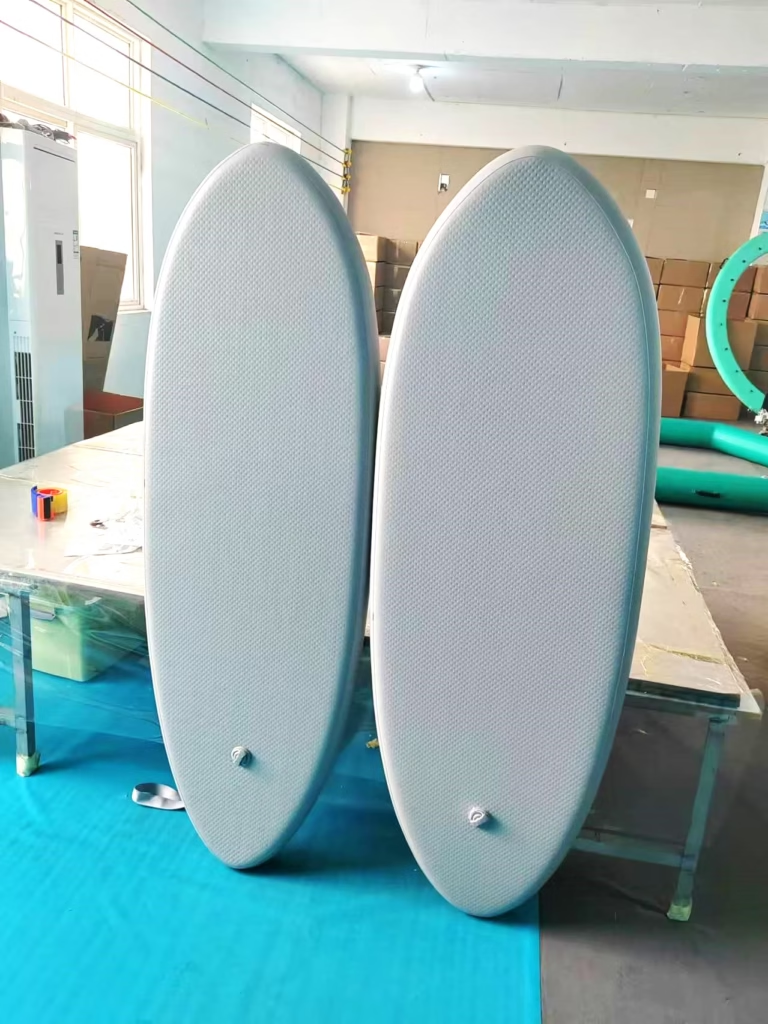
Drop stitch technology has transformed inflatable watercraft design. Unlike traditional inflatable boats that feel soft and unstable, drop stitch kayaks use thousands of internal polyester threads that connect the top and bottom PVC layers. When inflated at high pressure, the structure becomes extremely rigid—almost like a hard-shell kayak.
Key reasons for market growth:
- Portability: Easy to transport and store compared to rigid kayaks
- Performance: High-pressure structure improves paddling efficiency
- Durability: Strong PVC and reinforced drop stitch core
- Cost advantage: Lower shipping and storage costs for brands
- Retail demand: Increasing popularity in outdoor and lifestyle markets
In 2026, more brands are entering the inflatable kayak market, especially DTC (direct-to-consumer) outdoor brands in North America and Europe. This makes OEM manufacturing capability more important than ever.
What Makes a Reliable Drop Stitch Kayak Manufacturer?
Not all suppliers are equal. A truly reliable manufacturer should meet strict standards in materials, production, quality control, and compliance.
1. Material Quality: The Foundation of Performance
The performance of a drop stitch kayak is determined primarily by materials.
Key material factors include:
- PVC thickness: Typically 0.7mm to 1.2mm for high-end models
- Drop stitch density: Higher density = better rigidity
- Fabric reinforcement: Double-layer PVC for abrasion resistance
- UV resistance coating: Essential for outdoor durability
A professional manufacturer should clearly specify:
- PVC supplier origin
- Fabric composition
- Glue or heat-weld technology used
If a supplier cannot clearly explain material structure, it is a major red flag.
2. Production Capability and Manufacturing Process
Manufacturing capability directly impacts consistency and scalability.
A reliable factory should have:
- Automated or semi-automated heat welding machines
- Dedicated drop stitch cutting and lamination lines
- Skilled technicians for sealing and assembly
- Stable monthly production capacity
Typical high-capacity factories can produce:
- 3,000–10,000 units per month depending on model complexity
Factories that rely heavily on manual glue processes often face:
- Higher defect rates
- Inconsistent air tightness
- Longer production cycles
3. Quality Control System (QC is Critical)
Quality control is one of the most important indicators of a serious manufacturer.
A proper QC system should include:
- Incoming raw material inspection
- In-process pressure testing
- Final inflation leak tests
- Load and stress testing
Professional manufacturers typically test kayaks at:
- 1.5x–2x working air pressure
- 24–48 hour inflation holding test
If a supplier cannot provide QC documentation or testing videos, caution is required.
4. Certifications and International Compliance
For brands selling in Europe and North America, certifications are essential.
Common certifications include:
- CE certification (European safety compliance)
- ISO 9001 quality management system
- REACH compliance for chemical safety
- SGS or third-party material testing reports
Certifications not only ensure safety but also reduce import risks and customs delays.
OEM vs Trading Company: How to Identify the Difference
One of the biggest sourcing risks is confusing trading companies with real manufacturers.
Real Factory Characteristics:
- Own production facility
- In-house engineering and design team
- Ability to customize shape, size, and structure
- Transparent production videos and workshop access
- Direct control over quality and materials
Factories are able to support:
- OEM branding
- Custom mold development
- Product optimization

Trading Company Characteristics:
- No real factory ownership
- Outsources production to unknown suppliers
- Limited control over quality
- Higher risk of inconsistency
- Often acts as a middleman
Trading companies may offer lower initial prices, but long-term risks include:
- Quality instability
- Delivery delays
- Lack of accountability
Key Questions to Ask a Kayak Manufacturer
Before selecting a supplier, always ask the following questions:
1. Can you provide OEM customization?
- Size options (8ft / 10ft / 12ft)
- Color customization
- Logo printing
2. What is your MOQ per model?
- Helps evaluate scalability and pricing structure
3. What materials do you use?
- PVC thickness
- Drop stitch density
- Reinforcement layers
4. Do you provide samples?
- Critical for product validation before bulk orders
5. What is your production lead time?
- Typical range: 25–45 days depending on order size
6. Do you support private label branding?
- Essential for DTC brands
If a supplier cannot answer these clearly, they may not be a professional OEM factory.
Common Mistakes When Sourcing Drop Stitch Kayaks
Many buyers make avoidable mistakes when selecting manufacturers.
Mistake 1: Choosing based only on price
Low cost often means compromised materials or weak QC systems.
Mistake 2: Ignoring air tightness testing
Air leakage issues are one of the most common product failures.
Mistake 3: Not verifying factory authenticity
Always request factory videos or live video calls.
Mistake 4: Skipping sample testing
Never place bulk orders without physical samples.
Mistake 5: Overlooking after-sales support
A good manufacturer should support long-term cooperation.
Recommended OEM Production Workflow
A professional kayak OEM process usually follows this structure:
- Product requirement discussion
- Design confirmation (size, structure, branding)
- Sample development
- Sample testing and adjustment
- Mass production approval
- Quality inspection during production
- Final inspection before shipment
- Logistics arrangement (FOB / DDP / CIF)
This structured workflow ensures both quality control and production efficiency.
How to Evaluate a Supplier in 2026 (Checklist)
Before final decision-making, evaluate suppliers using this checklist:
✔ Verified factory or production facility
✔ Material specification transparency
✔ Stable production capacity
✔ OEM customization capability
✔ Sample quality consistency
✔ QC inspection process
✔ Export experience to EU/US markets
✔ Clear communication and technical support
A supplier that meets most of these criteria is likely a reliable long-term partner.
Why Working with a Professional OEM Factory Matters
In today’s competitive water sports market, success is not just about having a product—it is about having a reliable supply chain behind it.
Working with a professional OEM drop stitch kayak manufacturer allows brands to:
- Build consistent product quality
- Reduce production risks
- Improve brand reputation
- Scale product lines efficiently
- Enter international markets with confidence
For DTC brands especially, manufacturer selection is one of the most important business decisions.
A strong factory partnership is not just a supplier relationship—it is a long-term strategic asset.
Conclusion
Choosing a reliable drop stitch kayak manufacturer in 2026 requires more than comparing prices. It requires understanding materials, production systems, quality control standards, and OEM capabilities.
The right manufacturer should act as a long-term partner, not just a production vendor. By carefully evaluating factories using the criteria in this guide, brands can significantly reduce risks and build a more stable and scalable product line.
If you are planning to develop or expand your inflatable kayak product line, working with a professional OEM factory will be the foundation of your success.
Looking for a reliable OEM drop stitch kayak manufacturer?
Contact us to discuss your custom kayak project, sample development, and bulk production requirements.
Explore Our Solutions