Floating Bouncer Manufacturer
XSEA supplies inflatable floating bouncers for water parks, resorts, rental businesses, camps and commercial recreation projects. We support custom sizes, shapes, colors, branding and configurations for B2B orders.
Our floating bouncers are designed for use on lakes, pools and other suitable water environments, with durable PVC construction and reinforced seams for repeated commercial use.
What Is a Floating Bouncer?
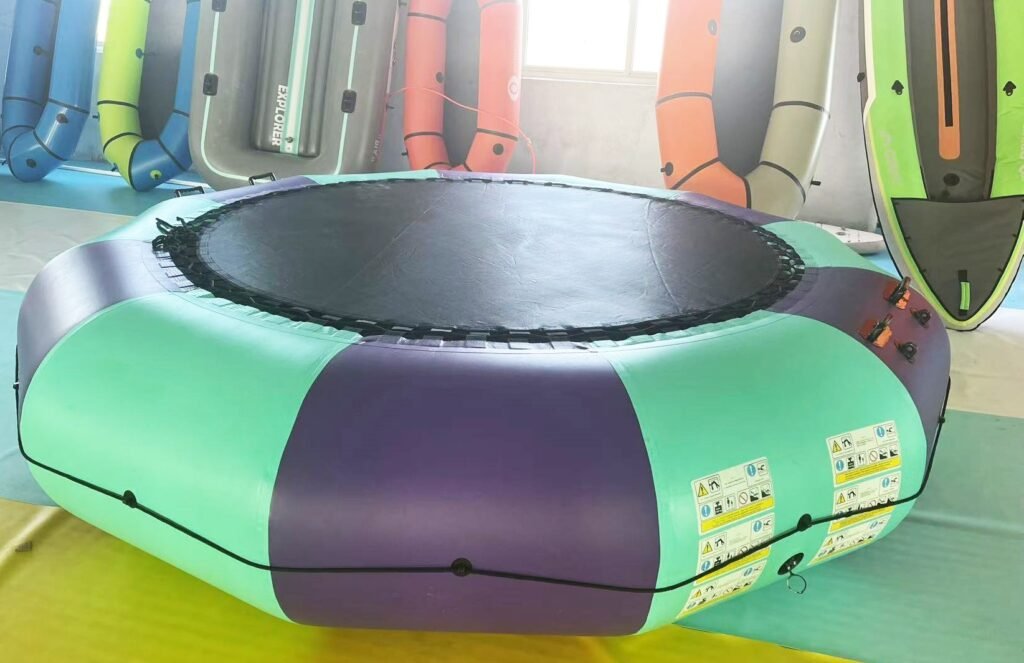
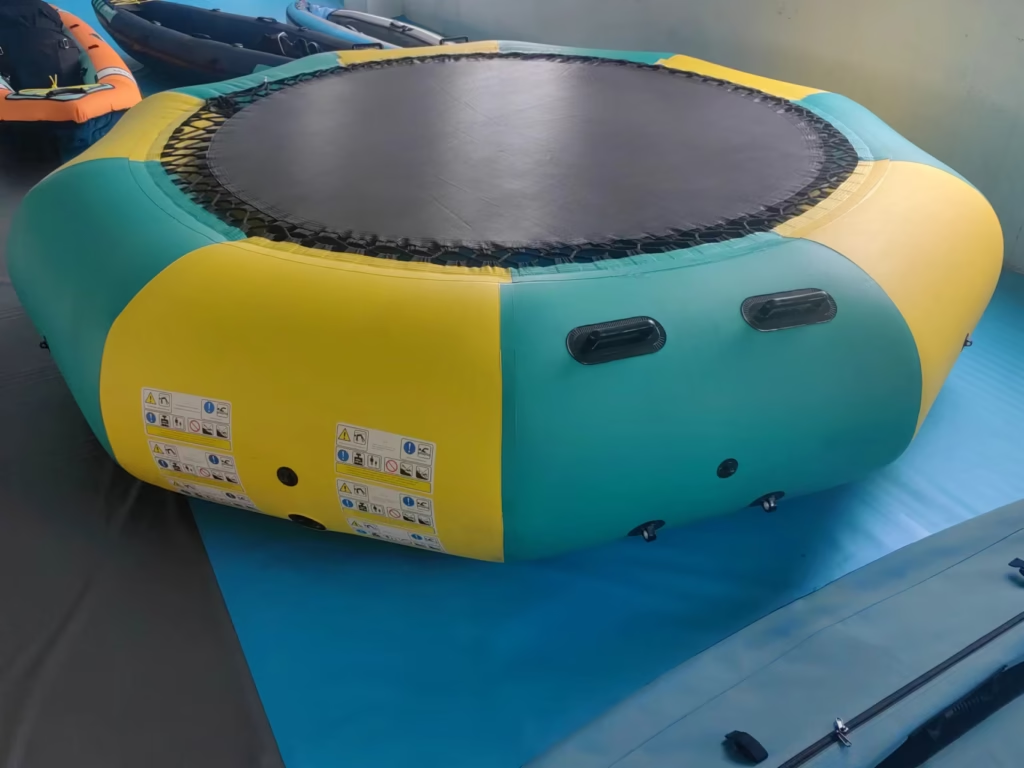
A floating bouncer is an inflatable water-play platform designed for jumping, bouncing and active recreation on the water.
Unlike a simple floating platform, a bouncer is built around an inflatable structure that provides a more active play experience. Depending on the design, it can include a jumping area, side walls, climbing elements, connection points or other inflatable features.
Floating bouncers are commonly used in:
- Water parks
- Resort water recreation areas
- Lake and waterfront attractions
- Rental businesses
- Camps and outdoor recreation facilities
- Commercial inflatable water parks
Floating Bouncer Types
Different projects may require different configurations. We can manufacture floating bouncers according to the intended application and available water area.
Inflatable Floating Bouncer
A basic inflatable bouncer provides a dedicated jumping and bouncing area on the water. It is suitable for resorts, rental operations and recreational facilities looking for a relatively simple water attraction.
Floating Bouncer with Additional Features
For larger water parks or commercial projects, the bouncer can be combined with other inflatable elements such as climbing areas, slides, platforms or connection points.
The configuration can be adjusted according to the project layout and required capacity.
Custom-Shaped Floating Bouncer
Not every project needs a standard round or rectangular design. Custom outlines and dimensions can be developed when the available water area, installation layout or branding requirements call for a different configuration.
Commercial Floating Bouncer Manufacturing
For commercial use, the inflatable structure needs to withstand repeated inflation, installation, use and handling.
Our production focuses on:
- Reinforced PVC construction
- Heat-welded seams
- Reinforced stress points
- Suitable inflation valves
- Secure handles and D-rings where required
- Custom connection points
- Quality inspection before shipment
The final construction can be adjusted according to the product size, intended use and customer requirements.
Floating Bouncer for Water Parks and Resorts
Floating bouncers can be used as individual attractions or as part of a larger inflatable water-play system.
For resorts and water parks, we can help develop products based on:
- Available water area
- Expected user capacity
- Product dimensions
- Connection requirements
- Color and visual identity
- Branding requirements
- Storage and transportation considerations
This allows buyers to develop a floating attraction that fits their existing water recreation project rather than relying only on standard products.
Floating Bouncer vs. Water Trampoline
Floating bouncers and inflatable water trampolines are related products, but they are not exactly the same.
A water trampoline is generally designed around a trampoline-style jumping area, while a floating bouncer is a broader category of inflatable water-play equipment.
If your project specifically requires a water trampoline, see our [Inflatable Water Trampoline] page for standard sizes and product specifications.
If you need a customized configuration, our [Custom Water Trampoline OEM Manufacturing] service can support size, appearance, branding and other requirements.
Custom Floating Bouncer Manufacturing
For B2B projects, the floating bouncer can be customized according to the required application.
Size and Shape
We can develop different dimensions and outlines based on the available water area and intended use.
Color and Appearance
Customers can select colors and visual combinations suitable for their resort, water park or brand.
Logo and Branding
Brand logos and other visual elements can be incorporated into suitable areas of the inflatable structure.
Accessories and Connection Points
Depending on the design, products can include handles, D-rings, reinforced connection points and other required components.
Packaging
Packaging can be discussed according to the order quantity, shipping method and customer’s distribution requirements.
Floating Bouncer OEM for Brands and Distributors
If you are developing your own water recreation product line, we can manufacture floating bouncers under your brand.
Our OEM service can cover:
- Requirement confirmation
- Product configuration
- Size and design confirmation
- Sample development
- Product testing and inspection
- Logo and branding
- Packaging
- Mass production
You can provide an existing product reference, drawing, dimensions or basic concept. Our team can then confirm what can be manufactured and what information is required to move forward.
How to Choose a Floating Bouncer Manufacturer
When comparing suppliers, price should not be the only consideration.
For a commercial floating bouncer, buyers should check:
Construction:
Ask what PVC material, seam construction and reinforcement methods are used.
Customization:
Confirm whether the supplier can produce the required size, shape, color and branding.
Production capability:
Check whether the supplier can handle samples, production and quality inspection under one supply chain.
Commercial application:
Make sure the product is designed for the intended environment and frequency of use.
Packaging and shipping:
Large inflatable products require practical deflation, folding and packaging arrangements to control shipping volume.
Why Work with XSEA?
XSEA provides inflatable product manufacturing for B2B customers, including floating bouncers, water trampolines, inflatable platforms and other custom water products.
Our manufacturing support includes:
- Custom product development
- OEM and private label production
- Sample orders
- Custom dimensions and configurations
- Branding and packaging
- Production inspection
- Export shipping support
We work with brands, distributors, resorts, water parks and rental businesses that need more than an off-the-shelf inflatable product.
Floating Bouncer Manufacturer FAQ
Can you make custom floating bouncers?
Yes. We can customize dimensions, shape, colors, branding and selected accessories according to the project requirements.
Can you add our logo?
Yes. Logo and branding options can be discussed during product development.
Do you provide samples?
Sample production is available for suitable custom projects. The sample cost and lead time depend on the design and required configuration.
Can floating bouncers be used for commercial rental?
Yes, floating bouncers can be developed for rental and other commercial recreation applications. The construction should be selected according to the expected frequency and environment of use.
Do you manufacture water trampolines too?
Yes. XSEA also manufactures inflatable water trampolines in standard and custom configurations.
Can you manufacture according to our drawing?
Yes. You can send us a drawing, dimensions, photos or product reference, and we can review the construction requirements before quotation.
Request a Floating Bouncer Quote
If you are sourcing floating bouncers for a water park, resort, rental business or distribution market, send us your required size, application, quantity and any available reference drawings or photos.
We can review the project and confirm the suitable configuration, customization options, sample requirements and production details.