Efoil Board Construction: EPP vs Fiberglass vs Carbon
Efoil boards are built using different materials and construction methods, and these choices affect weight, stiffness, durability, performance and cost.
The three materials most commonly considered when comparing eFoil board construction are EPP, fiberglass and carbon fiber. Each has different advantages, so the best choice depends on whether the priority is durability, performance, weight, price or commercial use.
For B2B buyers, understanding the construction is also important when developing an eFoil product for a specific market.
What Is Efoil Board Construction?
Efoil board construction refers to the materials and internal structure used to build the board.
A typical eFoil board may include:
- Outer skin or composite layers
- Foam core
- Internal reinforcement
- Mounting structure for the mast
- Battery compartment
- Electronics enclosure
- Connection points for propulsion and control systems
The board needs to be strong enough to support the rider and handle repeated water impact while remaining suitable for the intended riding style.
Different construction methods can produce very different results even when two boards have similar dimensions.
EPP Efoil Board Construction
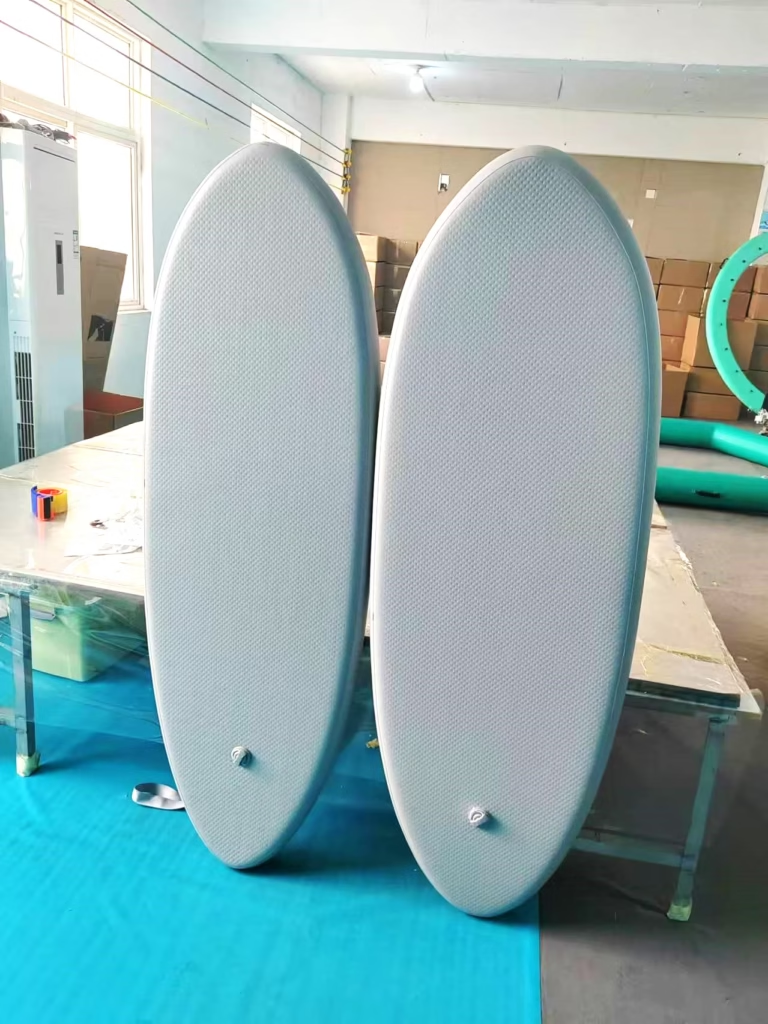
EPP stands for expanded polypropylene, a lightweight foam material known for its impact resistance and resilience.
EPP is often used where durability and practical handling are more important than achieving the lowest possible weight.
Advantages of EPP
- Good impact resistance
- Lightweight
- Resilient foam structure
- Suitable for beginner-oriented boards
- Practical for rental and commercial use
- Generally more cost-effective
One of the main advantages of EPP is its ability to tolerate everyday impacts. This can be useful for beginners who are still learning board control and may experience more frequent contact with the water.
For rental businesses and training programs, durability can also be an important consideration.
Limitations of EPP
EPP construction is not necessarily the best choice when the primary goal is maximum stiffness, premium appearance or the lowest possible board weight.
For performance-oriented products, composite construction may provide a more suitable balance.
Fiberglass Efoil Board Construction
Fiberglass is a common composite reinforcement material used in boards and other water-sports equipment.
Fiberglass construction generally offers a balance between stiffness, durability and manufacturing cost.
Advantages of Fiberglass
- Good structural stiffness
- Balanced weight
- Durable composite construction
- More rigid than basic foam-only structures
- Suitable for a wide range of applications
- Generally less expensive than premium carbon construction
Fiberglass can be a practical choice when a manufacturer wants a composite board without moving to a higher-cost carbon fiber construction.
Limitations of Fiberglass
Compared with carbon fiber, fiberglass generally has a lower stiffness-to-weight ratio.
This means a fiberglass board may need additional material or reinforcement to achieve the same structural performance as a comparable carbon-fiber design.
Carbon Fiber Efoil Board Construction
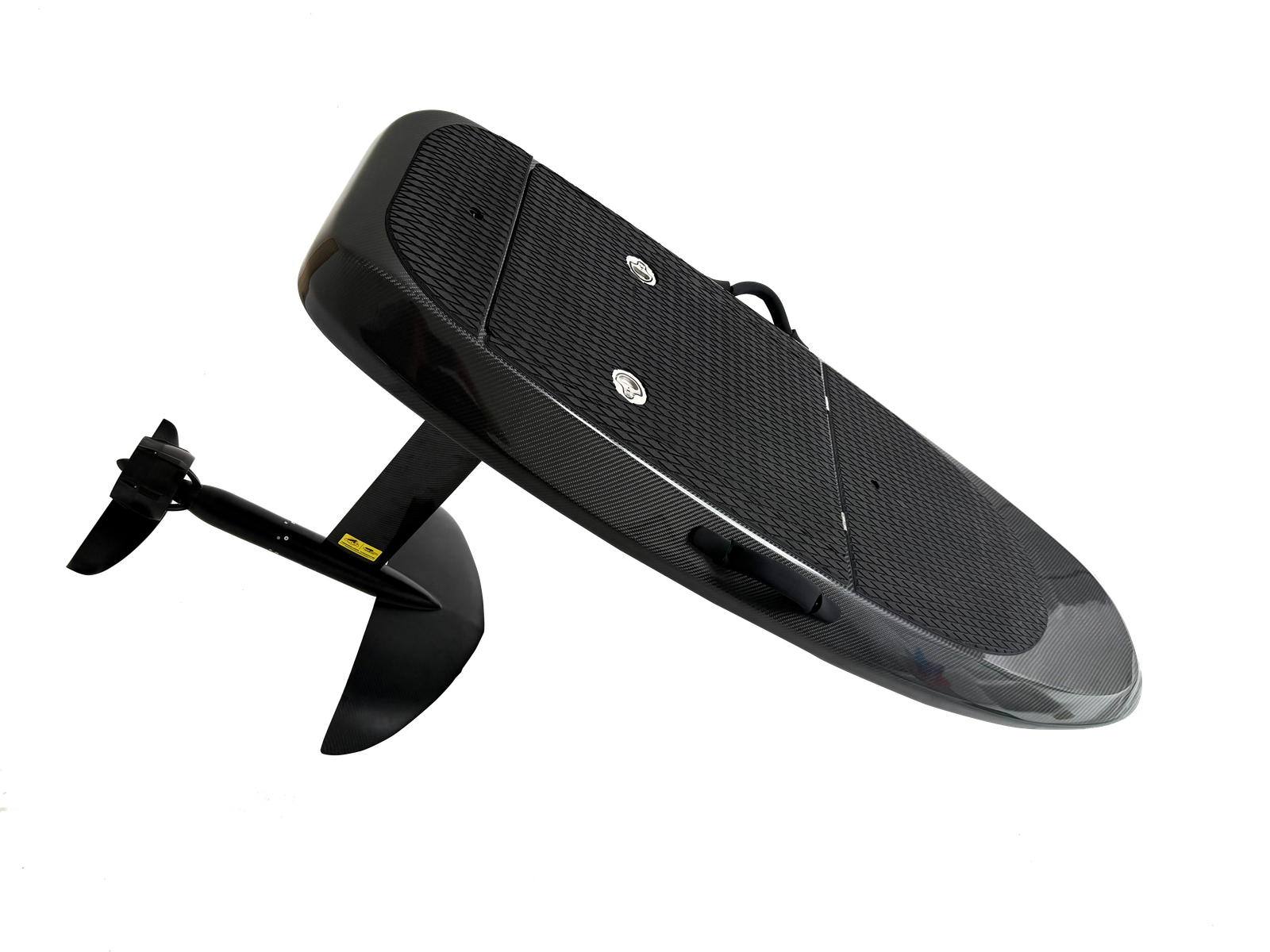
Carbon fiber is widely used in performance-oriented composite structures because of its high stiffness and strength relative to its weight.
A carbon fiber eFoil board can provide a rigid and responsive structure while keeping weight relatively low.
Advantages of Carbon Fiber
- High stiffness-to-weight ratio
- Lightweight composite construction
- High structural rigidity
- Responsive handling
- Premium appearance
- Suitable for performance-oriented products
Carbon fiber is particularly attractive for premium eFoil models where weight, stiffness and overall product positioning are important.
Limitations of Carbon Fiber
The main disadvantage is cost.
Carbon fiber construction generally requires more expensive materials and more controlled manufacturing processes than basic foam or fiberglass construction.
It can also be less forgiving of certain types of impact than resilient foam-based construction, depending on the specific laminate and internal structure.

EPP vs Fiberglass vs Carbon Fiber
The best material depends on what the board needs to achieve.
| Construction | Weight | Stiffness | Impact Resistance | Cost | Typical Positioning |
|---|---|---|---|---|---|
| EPP | Low | Moderate | High | Lower | Beginner / rental / practical |
| Fiberglass | Moderate | Good | Good | Medium | General-purpose |
| Carbon Fiber | Low | High | Good* | Higher | Premium / performance |
*Actual impact resistance depends on the laminate, reinforcement, core and complete board construction, not simply the material name.
Which Efoil Board Construction Is Best?
There is no single construction that is best for every rider or market.
Choose EPP When Durability Matters
EPP can be a good option when the product needs to handle frequent handling, beginner use or commercial rental environments.
Its resilience can help reduce concerns about minor impacts during everyday use.
Choose Fiberglass for a Balanced Configuration
Fiberglass can provide a middle ground between cost, stiffness and durability.
It may be suitable for brands looking for a composite eFoil without positioning the product at the premium carbon-fiber level.
Choose Carbon Fiber for Performance
Carbon fiber is generally better suited to premium and performance-focused products where low weight and high stiffness are important.
It can also support a higher-end product position for brands targeting experienced riders.

Does Board Material Affect Efoil Performance?
Yes, but material is only one part of the overall system.
Efoil performance is also affected by:
- Board dimensions
- Board volume
- Rider weight
- Hydrofoil design
- Front wing size
- Mast length
- Motor power
- Propulsion efficiency
- Battery capacity
- Overall system weight
A lightweight carbon board does not automatically make an eFoil faster.
For example, motor power and hydrofoil configuration can have a much greater effect on top speed and acceleration than the board material alone.
Board construction is therefore best evaluated as part of the complete eFoil system.
Board Stiffness and Riding Feel
Stiffness affects how efficiently the board responds to rider input and how the structure transfers forces through the board.
A stiffer board can provide:
- More direct control
- More responsive handling
- Better structural efficiency
- A more performance-oriented riding feel
However, stiffness should not be considered separately from durability.
A product designed for beginners or rental use may benefit more from impact tolerance and practical durability than from maximum rigidity.
Board Weight and Handling
Lower board weight can make an eFoil easier to carry and handle on land.
It can also contribute to the overall weight of the complete riding system.
However, reducing weight should not come at the expense of the structural requirements of the board.
For commercial eFoils, buyers should consider the total system weight rather than looking only at the board itself.
The battery, motor, mast, hydrofoil and other components can contribute significantly to the final riding weight.
What About Hybrid Efoil Construction?
Some eFoil boards combine different materials and reinforcement methods rather than relying on a single material.
For example, a board may use a foam core together with fiberglass and carbon reinforcement in selected areas.
This approach allows manufacturers to reinforce high-stress areas while controlling weight and manufacturing cost.
A hybrid construction can therefore provide a practical compromise between:
- Weight
- Stiffness
- Durability
- Cost
- Manufacturing complexity
The actual result depends on the laminate design, core structure and reinforcement layout.
Efoil Board Construction FAQ
What is the best material for an eFoil board?
There is no universal best material. EPP, fiberglass and carbon fiber each have different advantages depending on the intended use, performance requirements and budget.
Is carbon fiber better than EPP for an eFoil?
Carbon fiber generally provides higher stiffness and a better stiffness-to-weight ratio, while EPP offers strong impact tolerance and practical durability. The better option depends on the intended application.
Are EPP eFoil boards durable?
EPP is known for its resilience and impact resistance, making it suitable for beginner-oriented, rental and practical applications.
Are carbon fiber eFoil boards lighter?
Carbon fiber can provide a high stiffness-to-weight ratio, but the final board weight depends on the complete construction, dimensions, reinforcement and components.
Does fiberglass make a good eFoil board?
Yes. Fiberglass can provide a good balance between stiffness, durability and manufacturing cost.
Does board material affect eFoil speed?
It can affect the total system weight and structural behavior, but speed also depends heavily on motor power, hydrofoil design, battery, rider weight and water conditions.
What construction is best for eFoil OEM?
The right construction depends on the target market, retail price, performance requirements, production volume and intended use. EPP, fiberglass, carbon fiber or hybrid construction may all be suitable for different OEM projects.
Final Thoughts
EPP, fiberglass and carbon fiber each offer a different balance of weight, stiffness, durability and cost.
EPP is practical and impact-resistant, fiberglass offers a balanced composite solution, and carbon fiber is well suited to lightweight and performance-oriented eFoil designs.
When comparing eFoil boards, look beyond the material name. The core, reinforcement, laminate structure and overall manufacturing quality are equally important.
For riders, board size and volume should also be considered alongside construction. For brands and distributors, the right material should be selected according to the intended market and product positioning.