What Is a Hydrofoil Surfboard?
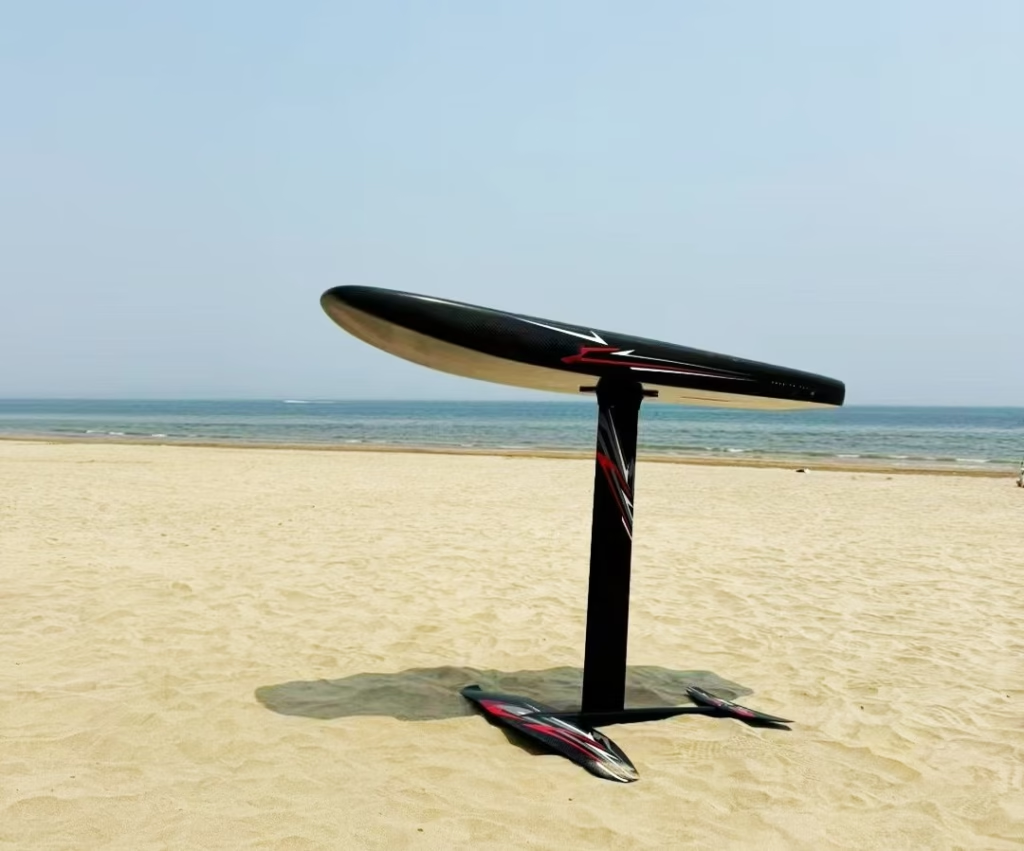
A hydrofoil surfboard is a board equipped with an underwater hydrofoil that lifts the board above the surface as it gains speed. Instead of continuously riding on the water, the rider can travel with the board elevated above the surface on the foil.
This reduces water resistance and creates a smooth, quiet riding experience that feels very different from traditional surfing.
How Does a Hydrofoil Surfboard Work?
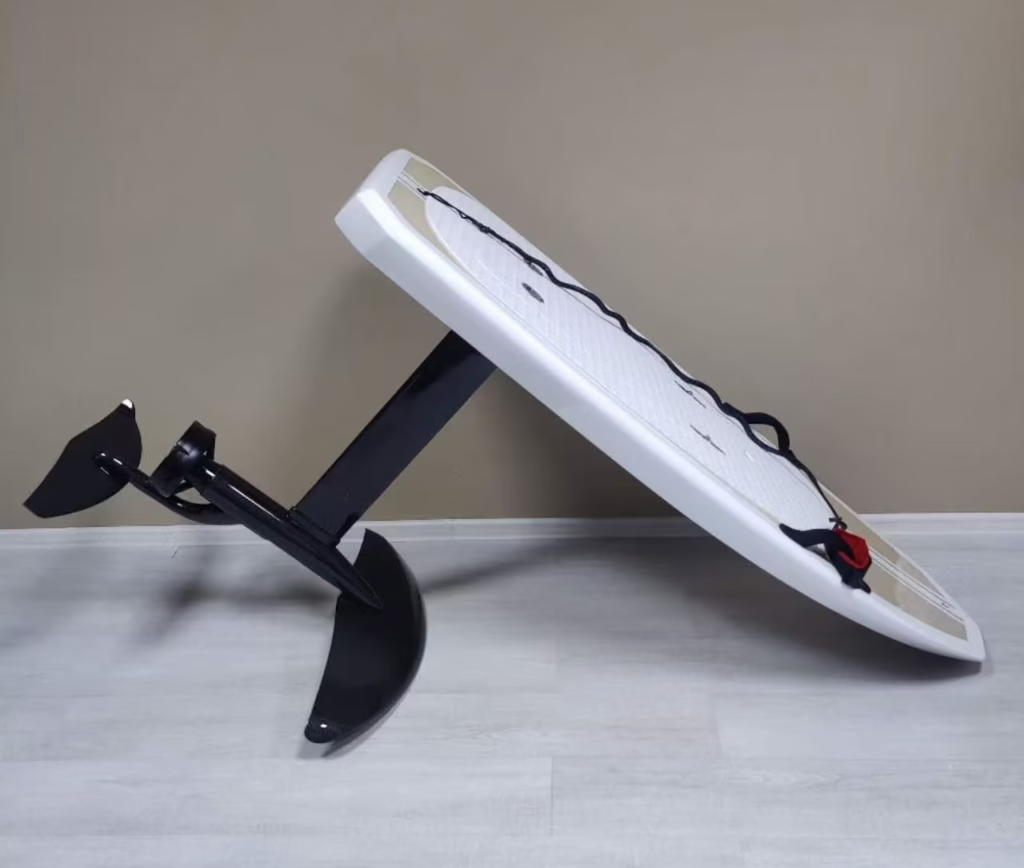
A hydrofoil system normally consists of several main parts:
- Board
- Mast
- Front wing
- Rear stabilizer
- Fuselage
The mast connects the board to the underwater foil. As the foil moves through the water, the front wing generates lift.
Once enough speed is reached, the lift raises the board above the water. The rider then controls the height and direction by shifting body weight and adjusting the board’s pitch and roll.
The basic principle is similar to an aircraft wing, but the hydrofoil operates underwater.
What Is a Hydrofoil?
A hydrofoil is an underwater wing designed to generate lift as it moves through water.
The main front wing produces most of the upward lift, while the rear stabilizer helps maintain balance and control.
Because the board is lifted out of the water, much less of the board remains in contact with the surface. This significantly reduces drag compared with riding directly on the water.
What Are the Main Types of Hydrofoil Surfboards?
Hydrofoil boards can be powered in different ways.
Surf Foil
A surf foil relies on natural wave energy. The rider catches a wave and uses the hydrofoil to continue gliding above the water.
This type requires the rider to generate or obtain enough speed from waves and is often associated with traditional foil surfing.
Wing Foil
Wing foiling combines a hydrofoil board with a handheld inflatable wing.
The wing provides power from the wind, while the hydrofoil lifts the board above the water.
Tow Foil
In tow foiling, a boat or personal watercraft pulls the rider to generate the speed required for the hydrofoil to produce lift.
Efoil
An eFoil is an electrically powered hydrofoil.
Instead of relying on waves, wind or a towing vessel, an electric motor drives a propeller mounted near the hydrofoil. A rechargeable battery supplies power to the motor, while a wireless remote allows the rider to control speed.
This makes an eFoil capable of riding on relatively calm water.
Hydrofoil Surfboard vs Efoil
The terms are related, but they are not interchangeable.
A hydrofoil surfboard describes a board using a hydrofoil to lift above the water. It can be powered by waves, wind, towing or an electric motor.
An eFoil is specifically a motorized hydrofoil board powered by an electric propulsion system.
| Feature | Hydrofoil Surfboard | Efoil |
|---|---|---|
| Hydrofoil | Yes | Yes |
| Electric motor | Not necessarily | Yes |
| Battery | Not necessarily | Yes |
| Main power source | Waves, wind, towing or motor | Electric motor |
| Requires waves | Depends on type | No |
| Suitable for calm water | Depends on type | Yes |
So, an eFoil can be considered a type of powered hydrofoil board, but not every hydrofoil surfboard is an eFoil.

What Are the Benefits of Hydrofoil Riding?
The main advantage of a hydrofoil is reduced drag.
Once the board rises above the water, the rider is mainly supported by the underwater foil rather than the board itself.
This can provide:
- Smooth and efficient gliding
- Less surface drag
- A quieter ride
- Better performance in suitable conditions
- A distinctive feeling of flying above the water
For eFoils, electric propulsion also makes it possible to ride without waiting for waves or relying on wind.
Is a Hydrofoil Surfboard Difficult to Ride?
Hydrofoil riding generally requires more balance and control than riding a conventional surfboard.
The main challenge is learning to control:
- Board pitch
- Side-to-side balance
- Riding height
- Speed
- Weight distribution
Beginners usually need time to become comfortable with the foil lifting the board away from the water.
For an eFoil, starting at a low speed and using a larger, more stable board can make the learning process easier.
How to Get Started with a Hydrofoil Surfboard
If you are new to hydrofoiling, equipment selection can make a significant difference.
1. Choose a Stable Board
A larger-volume board generally provides more stability during the early learning stage.
2. Use an Appropriate Foil
A larger front wing can provide more lift at lower speeds, although the best setup depends on the rider, board and intended use.
3. Start at Low Speed
For an eFoil, begin with a low speed setting and learn to control the board before attempting to lift fully above the water.
4. Learn to Control Pitch
Small movements can significantly affect the height of a hydrofoil board. Smooth weight shifts are more effective than sudden movements.
5. Use Appropriate Safety Equipment
A helmet and suitable personal flotation equipment are recommended. Always check local water-sports rules and choose an appropriate riding area.
What Size Hydrofoil Board Should a Beginner Use?
There is no single board size that works for every rider.
The right setup depends on factors such as:
- Rider weight
- Experience level
- Board volume
- Board dimensions
- Front wing size
- Mast length
- Intended riding conditions
Beginners generally benefit from greater stability and easier lift characteristics, while experienced riders may prefer smaller and more responsive equipment.
For a more detailed comparison, see our Efoil Size Guide.
Hydrofoil Surfboard vs Traditional Surfboard
A traditional surfboard stays in contact with the water throughout the ride.
A hydrofoil board uses an underwater wing to lift the board above the surface.
| Feature | Traditional Surfboard | Hydrofoil Surfboard |
|---|---|---|
| Board contacts water | Yes | Mainly during takeoff |
| Underwater foil | No | Yes |
| Drag at speed | Higher | Lower once foiling |
| Learning curve | Generally easier | Generally more demanding |
| Riding experience | Surface riding | Elevated foil riding |
The hydrofoil therefore changes both the equipment and the way the rider controls the board.
How Is an Efoil Powered?
An eFoil normally combines four major systems:
- Electric motor – provides propulsion.
- Battery – stores electrical energy.
- Electronic controller – manages motor power.
- Wireless remote – allows the rider to select speed and control the system.
The motor drives a propeller or propulsion unit mounted near the hydrofoil. The battery powers the system, while the controller manages electrical output.
Different eFoil systems use different battery capacities, motor powers and control systems, so performance and ride time can vary significantly between models.
For a deeper look at battery capacity, charging and range, see our Efoil Battery Guide.
EPP vs Carbon Fiber Efoil Boards
Efoil boards are available in different construction methods and materials.
EPP-based boards are generally valued for durability, impact tolerance and practical use.
Carbon fiber construction can provide a lighter and stiffer structure and is often selected for performance-oriented applications.
The best construction depends on the intended rider, market positioning and budget.
For a detailed comparison, see our guide to Efoil Board Construction: EPP vs Fiberglass vs Carbon.
How Much Does an Efoil Cost?
Efoil prices vary significantly depending on the board construction, battery, motor, electronics, foil system and brand.
Entry-level models can be significantly less expensive than premium carbon-fiber systems with larger batteries and higher-performance components.
If you are comparing different models, it is useful to look beyond the board price and consider the complete system, including:
- Battery
- Charger
- Remote
- Hydrofoil
- Motor
- Spare parts
- Warranty and after-sales support
For current pricing factors and typical market ranges, see our Efoil Price Guide.
Is an Efoil Right for You?
An eFoil may be a good choice if you want to:
- Ride without depending on waves
- Use calm lakes or suitable coastal water
- Explore electric water sports
- Control your speed electronically
- Enjoy a smooth foil-riding experience
However, an eFoil is not the easiest water-sports equipment to learn. Riders should be prepared to spend time developing balance and foil control.
Buying or Developing an Efoil for Your Brand
For individual riders, the main considerations are board stability, foil size, battery capacity, motor performance and overall usability.
For brands, distributors and rental businesses, the requirements are different.
A commercial eFoil project may involve:
- Board construction
- Motor and propulsion system
- Battery capacity
- Hydrofoil configuration
- Remote control
- Branding
- Packaging
- Spare parts
- Product testing
- OEM production
XSEA supports EPP and carbon-fiber eFoil platforms as well as OEM product development for B2B customers.
See our Efoil OEM Manufacturing page for information about product customization and production.
Hydrofoil Surfboard FAQ
What is a hydrofoil surfboard?
A hydrofoil surfboard is a board equipped with an underwater hydrofoil that generates lift and raises the board above the water as it gains speed.
Is an eFoil the same as a hydrofoil surfboard?
An eFoil is a type of powered hydrofoil board. It uses an electric motor and battery instead of relying only on waves, wind or towing.
Can you use a hydrofoil surfboard without waves?
Yes, depending on the type. An eFoil can operate without waves because its electric motor provides the necessary propulsion.
Are hydrofoil surfboards difficult to ride?
They generally require more balance and control than traditional surfboards. Beginners should start with suitable equipment, low speeds and safe conditions.
How fast can an eFoil go?
Top speed depends on the motor, battery, board, hydrofoil, rider and water conditions. Different models can have significantly different performance.
How long can an eFoil run?
Ride time depends mainly on battery capacity, riding speed, rider weight, water conditions and motor power. Higher speeds generally consume more energy.
What is the difference between an eFoil and a surf foil?
A surf foil relies on wave energy, while an eFoil uses an electric motor and battery to provide propulsion.
Final Thoughts
A hydrofoil surfboard uses an underwater wing to lift the board above the water, reducing drag and creating a distinctive gliding experience.
There are several ways to power a hydrofoil, including waves, wind, towing and electric propulsion. An eFoil is the electric version, combining a hydrofoil with a motor, battery and electronic control system.
If you are learning about eFoils, start by understanding the basic equipment and then compare board construction, size, battery capacity and overall system performance before choosing a model.
👉 Check out the Xsea 8KW EPP Efoil , Carbon Fiber Efoil